Questions About Sado, the Tea Ceremony: How Many Times Do We Bow?!
Honestly, I had never actually counted before… so I tried it.
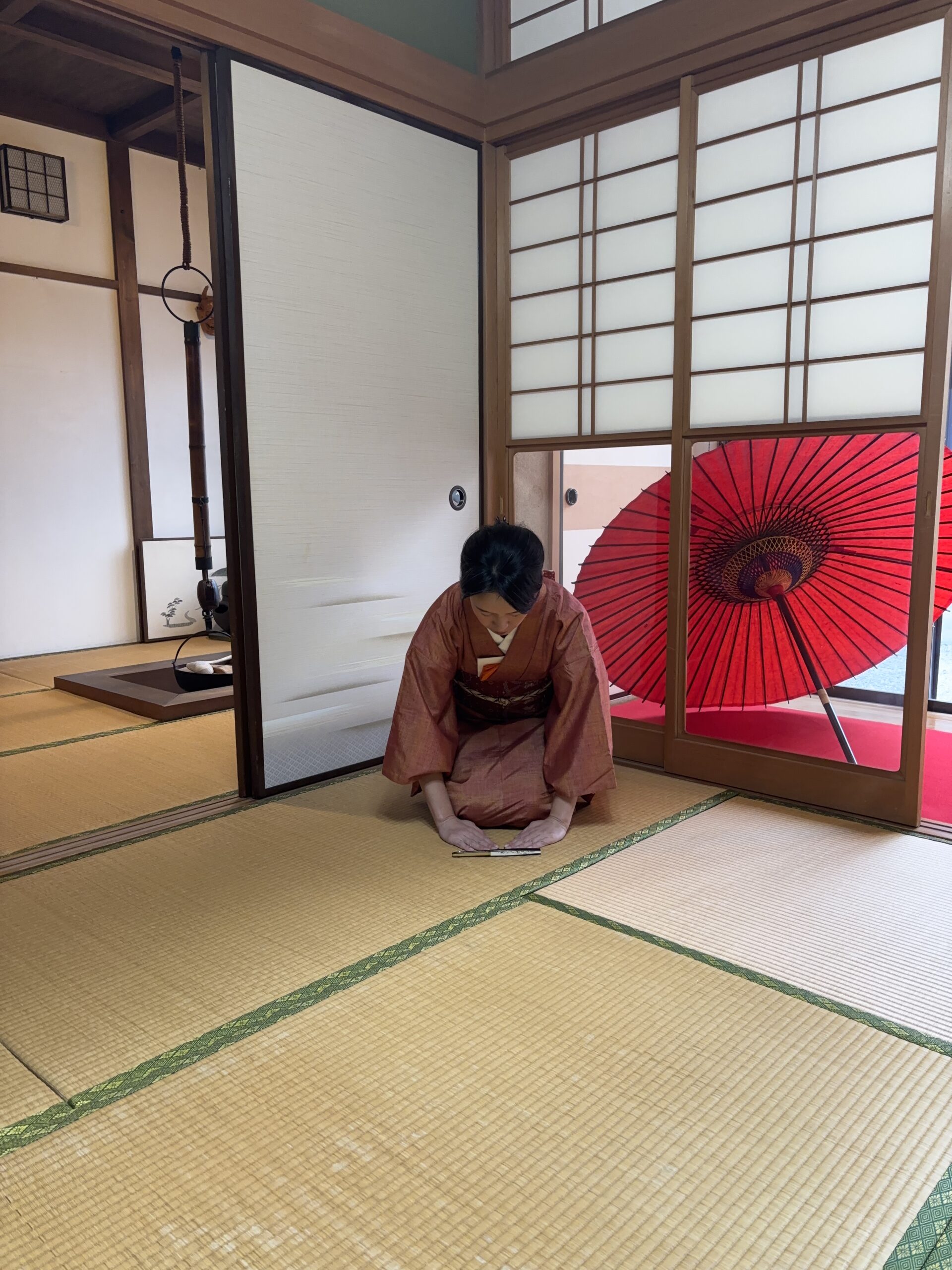
And depending on the school of tea, the number may vary. But when we host a tea ceremony at our salon, there are at least seven bows exchanged between the host and guest.
Why so many?
Because bowing is a greeting—an acknowledgement of mutual respect.
If someone bows to you, you bow back.
Simple!
Let’s take a look at those seven key moments. (These apply when there is one guest.)
1) When sweets are served
In the tea ceremony, guests enjoy sweets before drinking matcha. The host silently bows: “Please enjoy.” The guest silently bows: “Thank you, I will.”
No words. Just hearts communicating.
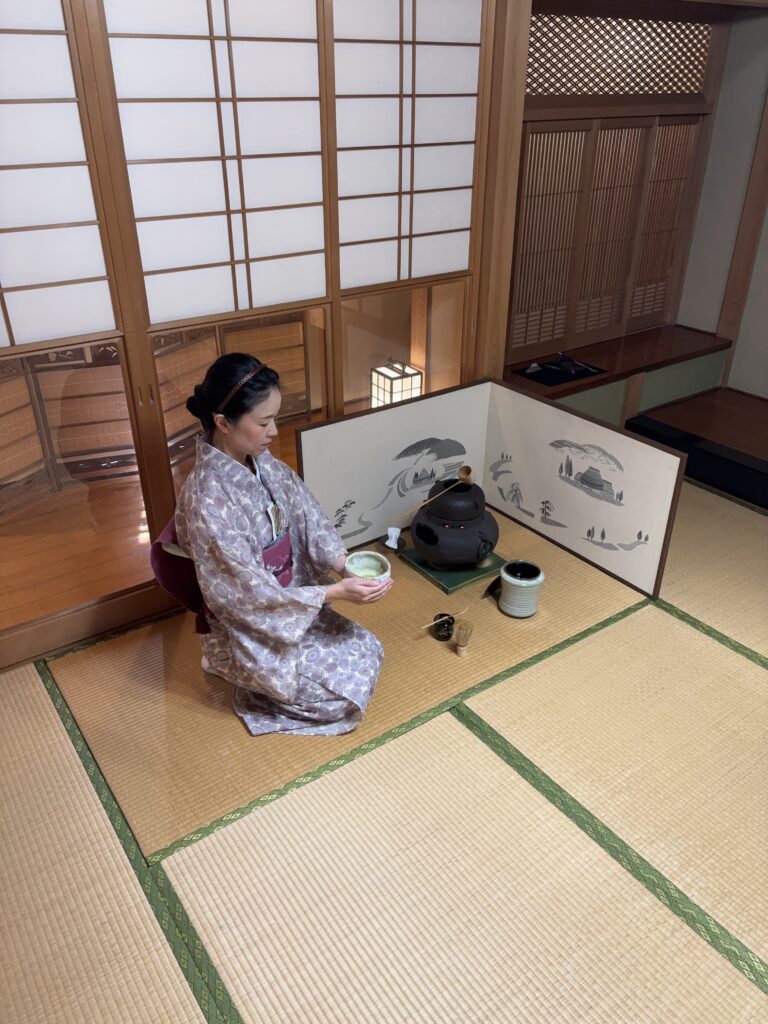
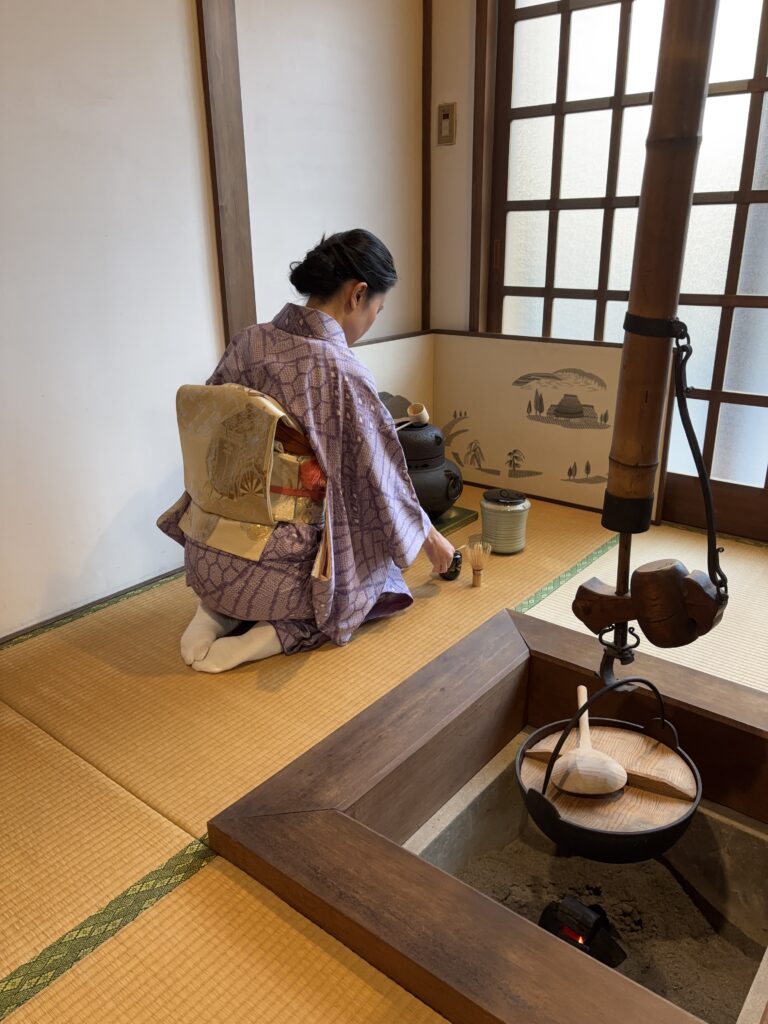
2) At the start of tea-making (otemae)
Before entering the tearoom, the host silently bows as if to say: “May I come in?” The guest silently returns the bow with the meaning, “Please do.”
3) After all utensils are brought in
A silent bow by the host that says: “Please relax.” And a thankful bow by the guest in response.
4) Before drinking the tea
The first spoken phrase of the ceremony appears here: The guest says “Choudai shimasu” (the polite version of “itadakimasu“). The host responds with a silent bow.
5) When the guest invites the host to conclude
After finishing the tea, the guest say, “Oshimai kudasai”, meaning “Please conclude.” The host silently bows in acknowledgement.
6) When the host declares the moving on to the closing process
Soon after the bows in the previous moment, the host places the bowl down and says, “Oshimai ni itasimasu”, meaning “I will conclude.” The guest silently bows back with the gratitude, “thank you for the tea”.
From here, the host puts the utensils away.
7) Final bow after everything is cleared
Restoring the tearoom to its clean, peaceful state is also part of the ceremony. A final silent bow marks the completion of the otemae — and the guest answers with a silent bow.
…And actually, that’s not all!
There are bows:
before formal greetings
after formal greetings
and MANY more depending on the situation.
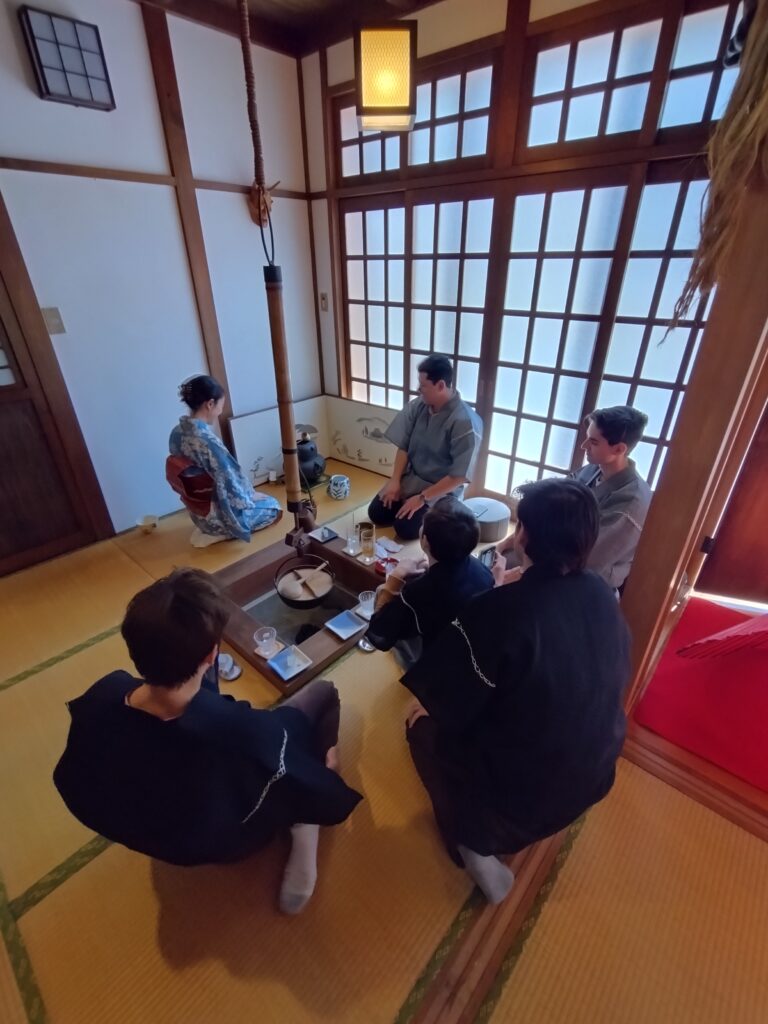
If there are multiple guests, even more bows appear: Guests bow to one another when taking sweets or drinking matcha. It’s like a friendly ripple effect of respect.
And in a tea gathering, there is a principal guest (shokyaku) who speaks and bows on behalf of everyone at certain times, such as saying “Oshimai kudasai”. (This is where bow-counting gets really complicated!)
So… how many bows do we need?
In the end:
The number doesn’t matter. What matters is returning the respect you are given.
When people exchange bows with sincere hearts, the atmosphere warms, the space feels harmonious, and somehow… the tea tastes even better.
Don’t you think so?