Questions About Sado, the Tea Ceremony: What Is the “Matcha Whisking Pose”?
The other day, I was listening to a radio program in which a female radio host, who practices the tea ceremony, was talking about the WBC. She mentioned that when the Japanese baseball team gets a hit, the players celebrate with what people call a “matcha whisking pose.”
She then added an interesting comment.
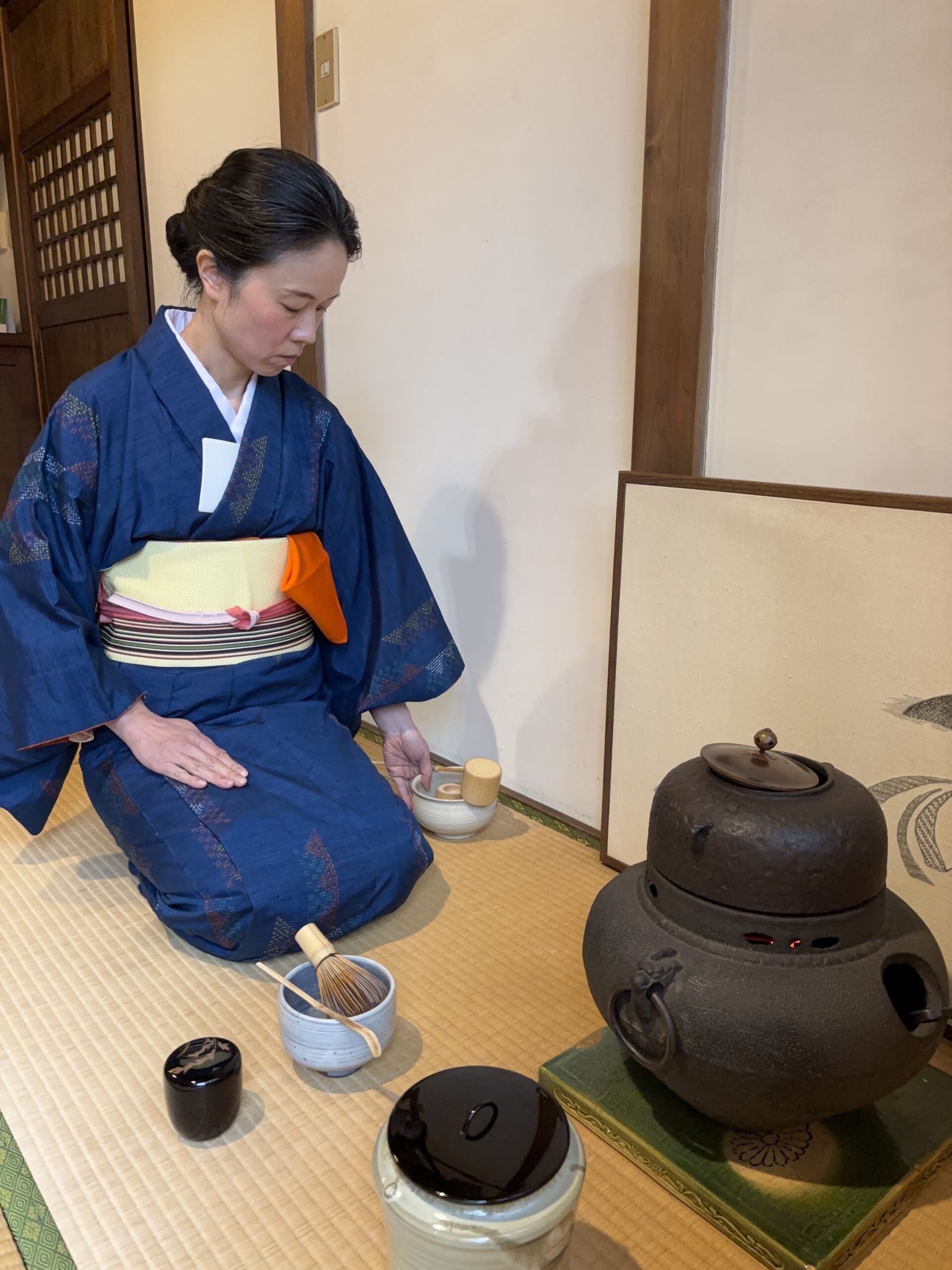
“When whisking matcha, the tea bowl is always placed down and the left hand gently steadies it. You never lift the bowl while whisking. I wonder if they could change just that part of the pose.”
Watching the gesture, it sometimes looks as though the players are holding the tea bowl from the bottom, or perhaps expressing the bowl with their left hand.
Movements That Reassure Everyone
What impressed me most about the radio host’s remark was how she described the movements of the tea ceremony. While jokingly saying, “Someone should tell the baseball team,” she explained that the gestures in tea ceremony are movements that never make anyone feel uneasy.
If you lift the bowl too high, you might drop it.
If you hold it with only one hand, it might tip over.
If you raise it too high and drop it, it could break.
When I first began learning the tea ceremony as a high school student, my teacher often gave me similar reminders.
Care for Guests, Utensils, and the Moment
Every movement in the tea ceremony is shaped by consideration—for the most important guests, for the precious utensils, and for everyone sharing the same space.
For this reason, the gestures in the tea ceremony are carefully designed so that no one present feels uneasy.
Experiencing these movements in person reveals a quiet beauty that is difficult to notice from the outside.
At Oh! Mama, you can experience this thoughtful tradition in a calm setting.
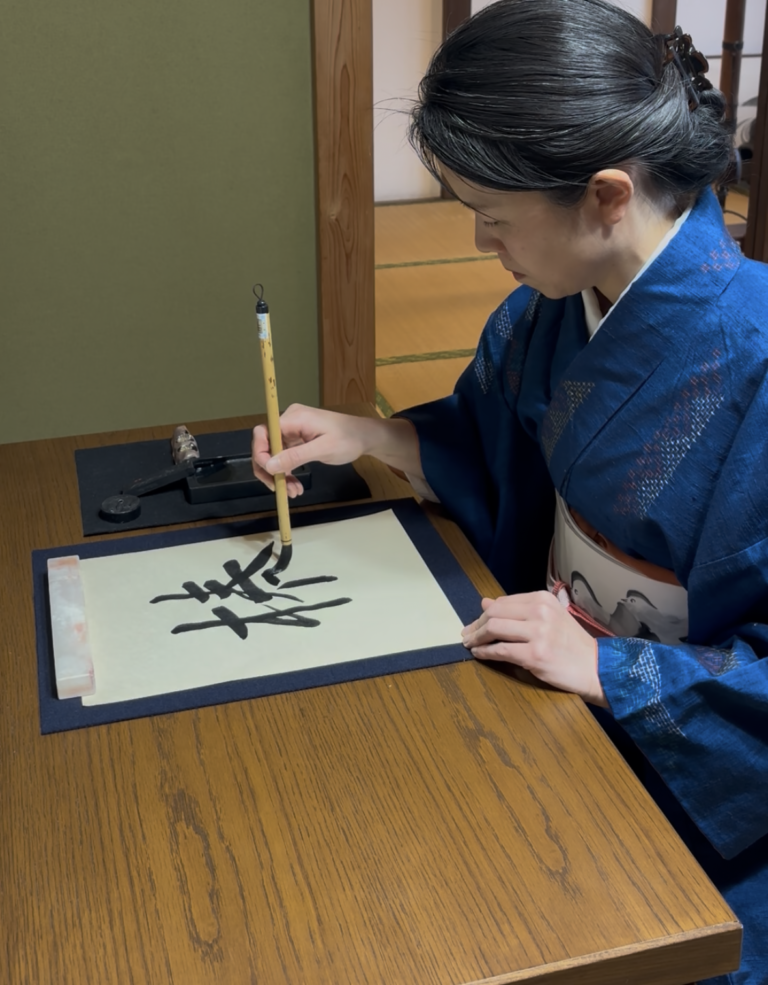
Oh! Mama is a traditional Japanese house located in Ikenoue, a peaceful residential neighborhood near Shibuya. Here, you can experience shodo (Japanese calligraphy) and a traditional matcha tea ceremony in a private setting.