Questions About Shodo, Japanese Calligraphy: Is Kasure — Dry Brush Strokes — a Mistake?
“Oh no… my brush stroke turned dry.”
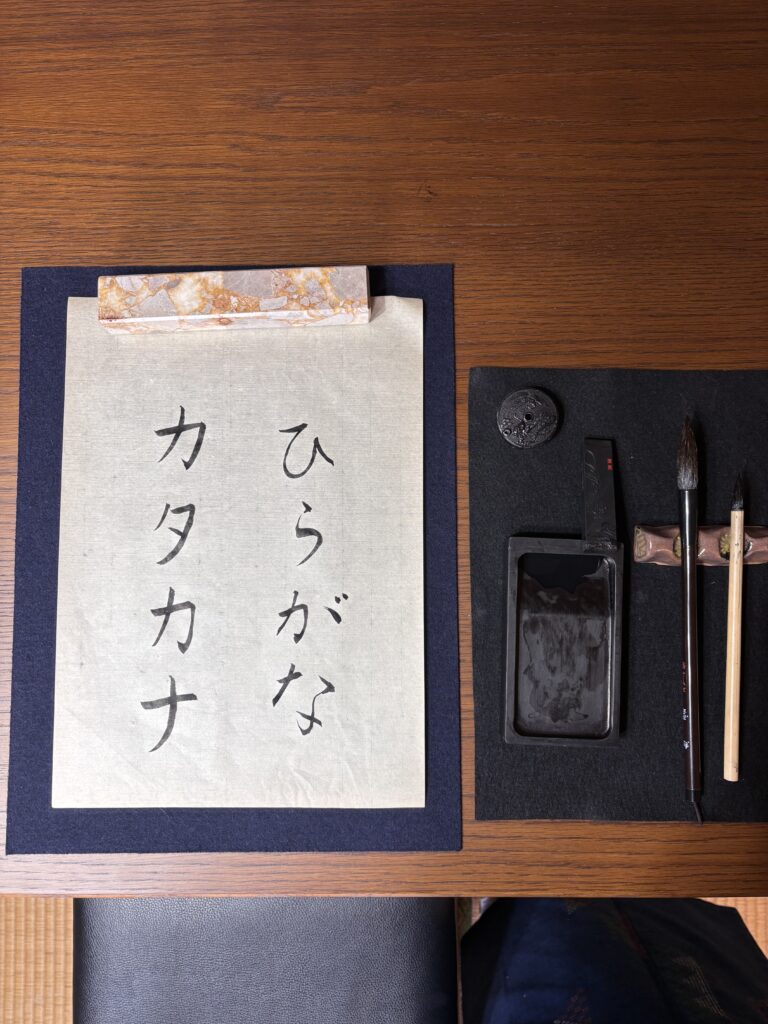
This is one of the most common concerns we hear during our shodo (Japanese calligraphy) experiences.
A guest finishes a stroke, pauses, and says quietly,
“Oh no… it is too dry.”
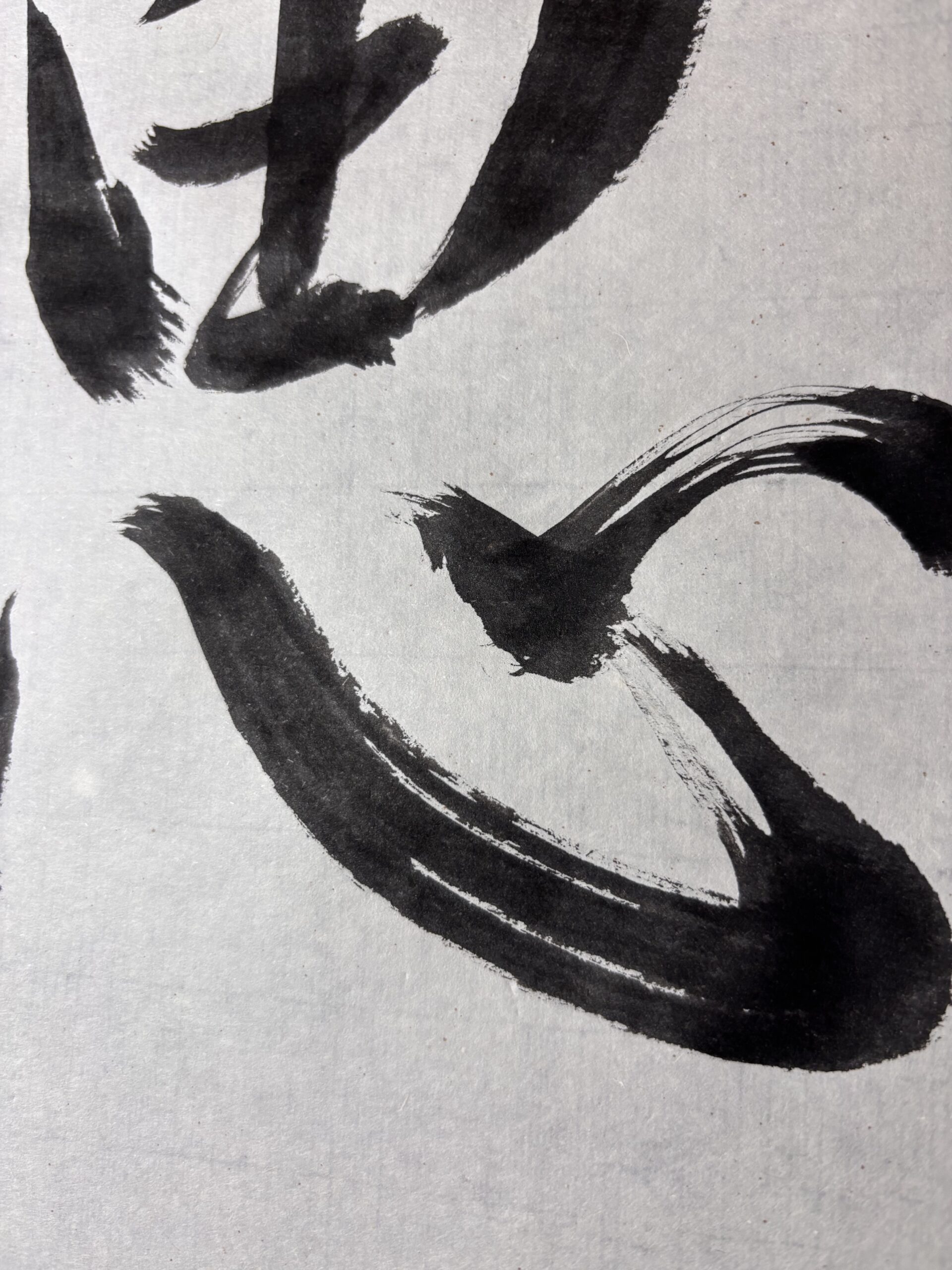
They are referring to kasure — the dry brush texture that appears when the ink begins to run out. Many people assume it is a mistake and something to avoid.
But in shodo, is dryness really something to fear?
Looking Closely at Masterpieces
If you look carefully at works created by professional calligraphers, you will notice something surprising.
There are splashes of ink.
There are blurred edges.
There are strokes that fade into dryness.
And yet, none of these feel accidental or unfortunate. On the contrary, they feel alive.
The Elements of Shodo: What Really Matters
At a major calligraphy exhibition in Tokyo this past New Year season, I noticed an English explanation describing three key elements of shodo:
- Shape of characters
- Quality of strokes
- Composition
All of these are created through brush movement.
Another section explained the key factors that create variation in strokes:
- Broad or slim lines
- Ink volume in the brush (wet or dry)
- Speed of the stroke
- Brush pressure
In other words, dryness — kasure — is not a failure. It is an expressive element even for master calligraphers.
When the Ink Begins to Fade
Imagine writing a single character.
You begin with a brush fully containing ink. You focus not only on the moment the brush touches the paper, but also on its movement through the air. You try to connect the entire character with one continuous flow of intention. Gradually, the ink begins to run low. The final strokes grow lighter.
Dry.
Instead of thinking, “I failed,” what if you thought, “This is my chance”?
The dryness can create a sense of wind, speed, and strength — something raw and dynamic.
And If You Want More Authority…
Of course, sometimes you may want the stroke to remain bold and dignified until the very end. In that case, try slowing down.
Much slower than you think is necessary.
When the brush moves slowly, even a small amount of ink has time to sink into the paper. The line becomes fuller, more grounded, more confident. Speed changes everything. With the same brush and the same ink, you can create completely different expressions.
The Beauty of the Uncontrolled
Personally, I love the natural beauty of kasure. There is something honest about it.
Something unrepeatable. A moment where intention and chance meet.
Perhaps your most beautiful stroke will be the one that almost ran out of ink.
Experience Shodo at Oh! Mama
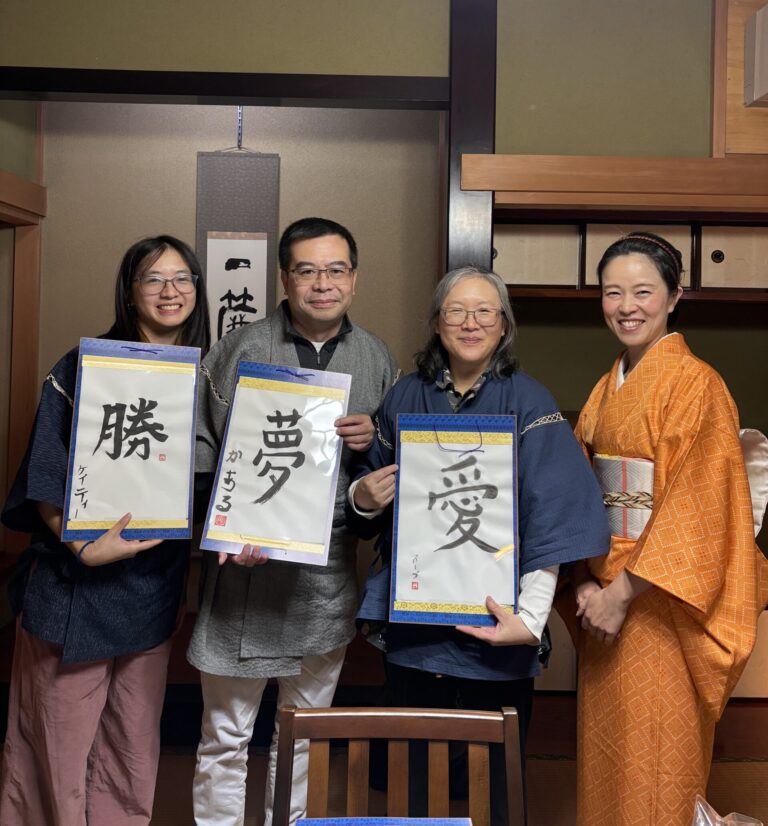
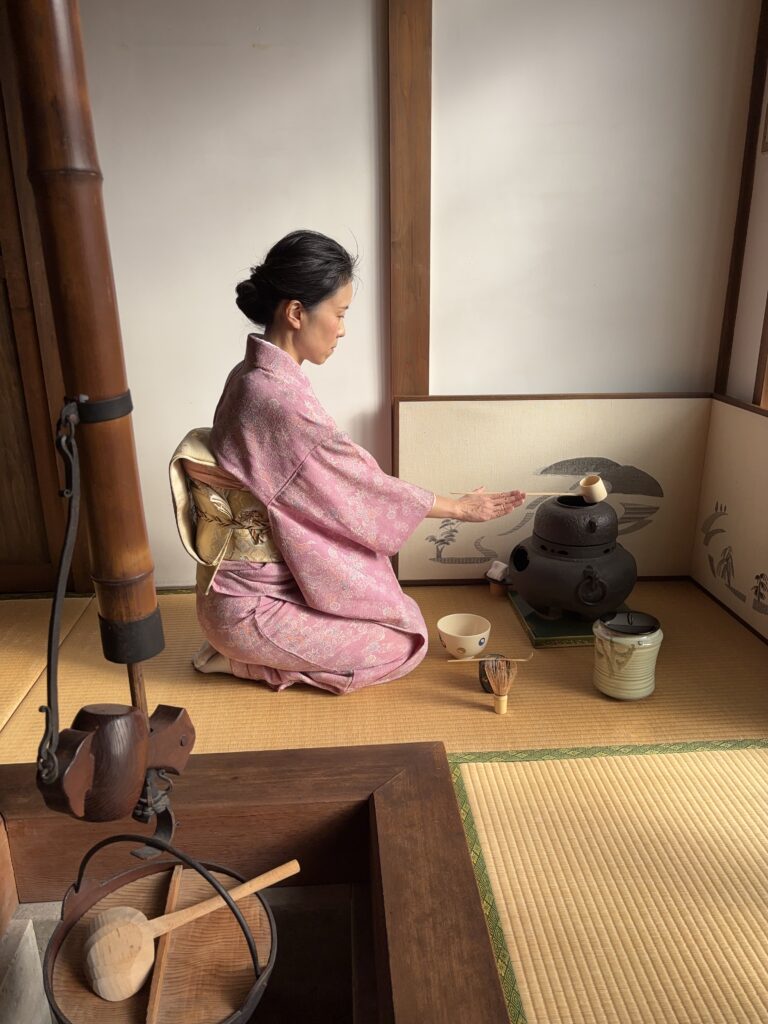
✨ Oh! Mama is a traditional Japanese house located in Ikenoue, a peaceful residential neighborhood near Shibuya.
We offer private shodo, calligraphy and sado, matcha tea ceremony experiences guided in English by a nationally licensed professional guide-interpreter.