Questions about Shodo, Japanese Calligraphy: No Second Strokes Allowed?
Are Second Strokes Really Not Allowed?
People who grew up in Japan often take it for granted that “in calligraphy, you are not allowed to write over the same stroke twice.” This belief comes from the fact that calligraphy is part of compulsory education in Japan, taught as a component of Japanese language classes.
Before the Brush: Learning with Pencils
In elementary school, children around the age of seven (first and second grade) do not yet practice brush calligraphy. Instead, they begin with very soft, dark pencils, learning how to write beautifully on paper.
Soft pencil leads make it easier to express details such as stopping, flicking, and sweeping strokes—skills that later connect directly to brush calligraphy.
A classic winter homework assignment for Japanese elementary students includes New Year’s calligraphy. Even my second-grade son submitted a pencil-written piece at the start of this new school term.
Side Note : Pencil Grades in Japan
Did you know that pencil grades like “HB” or “4B” are not international standards?
In Japan, they are defined by JIS (Japanese Industrial Standards). I didn’t know this either.
The standard pencil for hard-pen writing practice is 4B. If you ever visit Japan, try buying one—it’s also excellent for drawing.
The Rule Begins: No Second Strokes
From third grade, students finally begin brush calligraphy. They learn everything from how to handle, wash, and store the tools, to posture, ink preparation, and basic brush movements.
And that is when they are clearly told: no second strokes allowed.
Interestingly, this rule already exists in hard-pen writing. First- and second-grade students are taught not to use erasers. If they make a mistake, they must start over on a new sheet of paper. After two years of this mindset, accepting the rule of “no rewriting” in calligraphy feels quite natural.
Why Rewriting Is Discouraged
Calligraphy teachers often say, “I can always tell when you’ve rewritten it.”
Overwritten areas appear darker, the ink layers unevenly, and the brush movement becomes unnatural. These subtle differences are immediately visible to a trained eye.
This is also how we explain it to our customers:
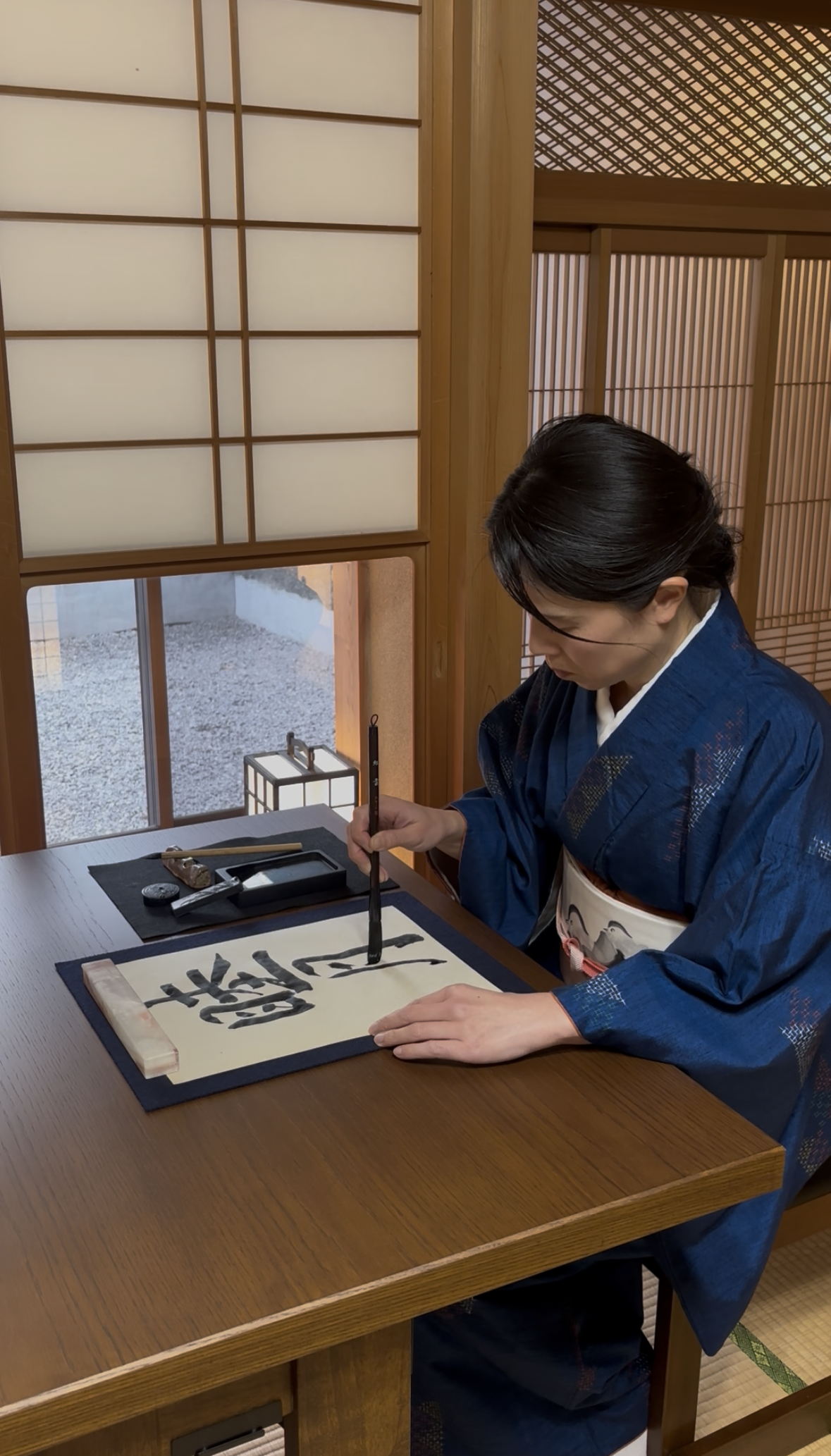
Calligraphy is a one-shot art.
Unlike painting, you do not layer or correct your work. That is precisely what creates focus, tension, and vitality. The movement of the brush is captured alive on the paper—and that energy is what makes the work truly beautiful.
An Exception: Supplementary Strokes (Hohitsu)
That said, rewriting is not absolutely forbidden.
After hearing “no second strokes” so many times, this may sound contradictory—but even I didn’t know this until recently. Professional calligraphers sometimes use a technique called hohitsu (補筆), meaning “supplementary strokes.” As the name suggests, it involves carefully adding strokes to areas that feel insufficient.
Since ink on paper cannot be erased, the only option is to add—never subtract. Long ago, before paper was widely used, people wrote on wooden tablets and shaved them down to correct mistakes. Unsurprisingly, this made forgery quite easy.
Why Supplementary Strokes Are So Difficult
For most people, attempting supplementary strokes carries enormous risk. Many calligraphy practitioners experience this phenomenon: after writing many sheets and reflecting on each attempt, the very first piece often feels the most satisfying.
Only a stroke that genuinely improves the work—without disrupting the original flow—is worthy of being added.
There is also a technical reason this is so difficult. A brush functions like an ink reservoir. At first, it holds plenty of ink; gradually, the ink runs out, and the strokes become lighter and drier. This natural transition is recorded across a single piece of work.
Adding strokes later means the ink amount in the brush will inevitably differ, making harmony extremely hard to achieve.
For all these reasons, supplementary strokes are a highly advanced technique, reserved for experienced professionals.
Returning to the Basics
So let’s return to the fundamentals.
Approach calligraphy with the mindset that there are no second chances on a paper.
Enjoy each stroke, each moment, with deep concentration.
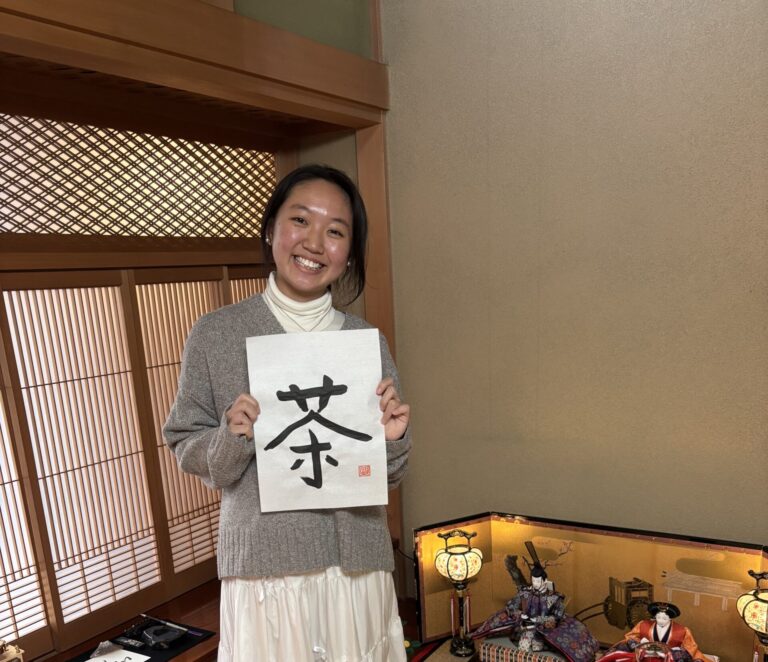
Come and discover the beauty, focus, and quiet intensity of traditional Japanese calligraphy—no experience required.