Questions About Shodo, Japanese Calligraphy: How Do We Appreciate Calligraphy?
When I look at a piece of calligraphy, I usually receive an immediate impression. But almost at once, my attention shifts to a simple question:
“What does it say?”
Reading or Feeling?
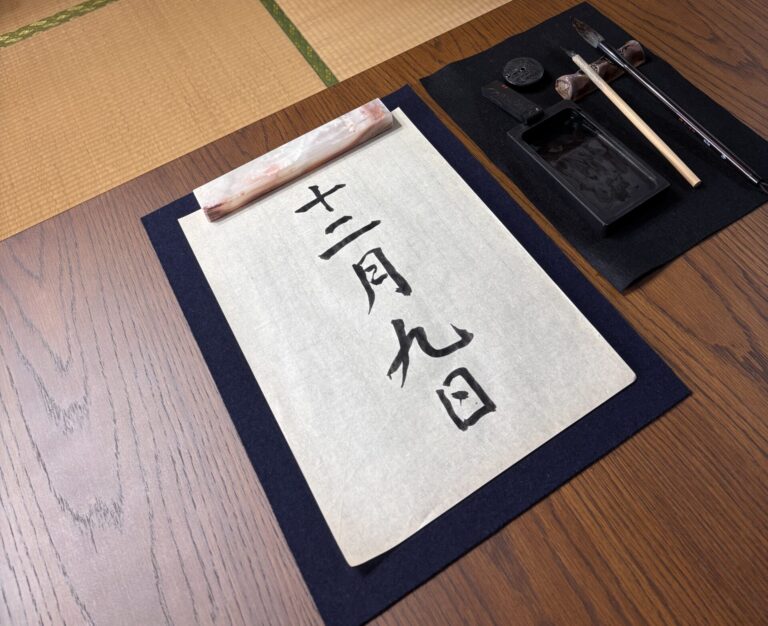
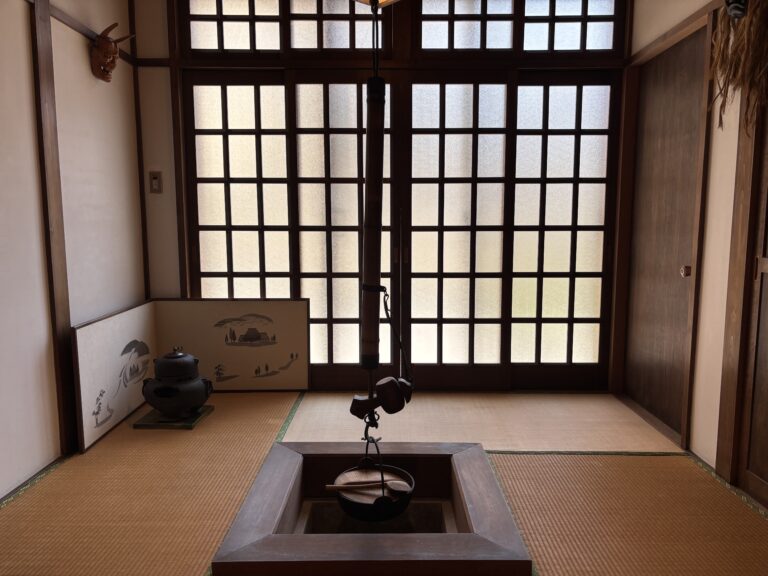
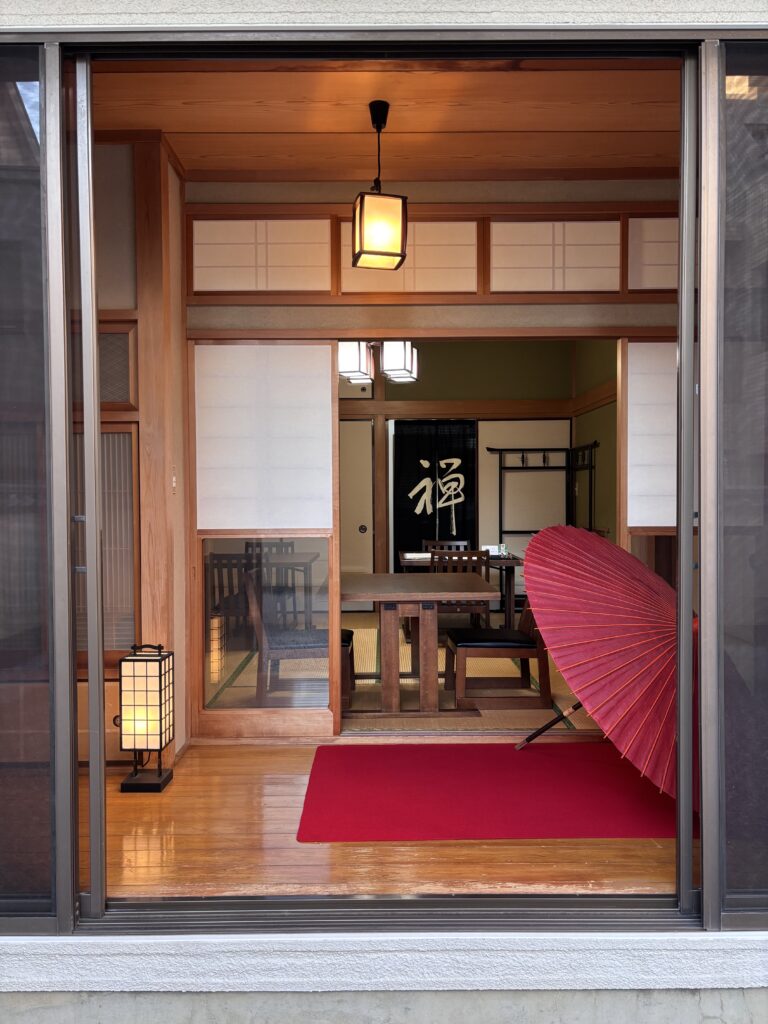
Traditional Japanese rooms often display calligraphy as decoration. The same is true of tea rooms.
In one video, a famous tea ceremony master said:
“You don’t need to read it. Just feel it. Savor it.”
On the other hand, an associate professor of art—whose specialty is ceramics—once wrote:
“Without knowledge, you cannot truly appreciate art.”
So, what should I do?
To explore that balance, let’s open a textbook—specifically, a high school calligraphy textbook—and learn some basic ways of appreciating calligraphy.
Three Steps to Appreciating Calligraphy
Step 1: Look at the Whole
First, take in the entire work and notice your overall impression. Does it feel powerful? Rustic? Dignified? Bold? Elegant? Quiet? Flexible?
There is no right or wrong answer—just trust your first feeling.
Step 2: Look More Closely
Next, observe the details. In calligraphy, we usually focus on three points:
(1) lines, (2) character form, and (3) composition.
1) Lines
Are there strong and weak lines, thick and thin strokes? If so, we say the work has rhythm and variation.
When both ink bleed (wet strokes) and dry-brush effects appear together, this balance is called junkatsu—the harmony of moisture and dryness.
Lines can be described using words similar to overall impressions:
wild, rhythmic, light, fleeting, tense, calm.
2) Character Form
This may seem difficult if you cannot read the characters. However, Japanese characters generally fit within an invisible square. Even without reading them, you may notice that characters are unusually tall, wide, compressed, or stretched.
If something catches your attention, try putting it into words—but it’s perfectly fine if you don’t.
3) Composition
Look at the spacing between characters and the empty space surrounding them. Wide spacing can feel relaxed and open, while tightly packed characters may feel dense and precise.
Sometimes, although calligraphy is a two-dimensional art, you may sense depth or movement. This can be described as a three-dimensional feeling.
Step 3: Put It into Words
Finally, gather the words and impressions you noticed in Steps 1 and 2.
By doing this, you begin to understand why you find a piece beautiful—and you can truly savor it.
And Still… We Want to Know What It Says
Of course, we’re still curious about the meaning. After appreciating the work freely, try reading the caption, or ask the owner or teacher about the text.
You may think,
“Ah, that’s why it was written with such soft, flowing lines.”
Understanding the meaning can deepen your appreciation even further.
A Child’s Way of Seeing
I once showed a photo of a piece of calligraphy—probably unreadable even for most adults—to my eight-year-old son and asked for his impression.
He said:
“It feels slow. I imagine the sea. The sky, the sea, and mountains. I can almost read some hiragana—あわ (awa), bubbles. Someone is swimming, and bubbles are floating up in the water.”
(His reading あわ (awa) was incorrect, but I loved the image.)
I thought it was a wonderful response.
The piece was a fragment of Horai-gire (mid-11th century), featured in a textbook. The text describes the meaning, “countless cranes flying across the vast sky, as if celebrating your longevity.”
The paper is decorated with shimmering mica and cloud-shaped indigo patterns—forms that can also resemble ocean waves.
To me, the cranes flying through the sky and my son’s image of someone swimming in the open sea did not feel so different.
Enjoy Calligraphy Freely
Calligraphy is meant to be appreciated freely. Put your feelings into words and enjoy the process.
Many Japanese people feel they are not good at verbalizing impressions—but when they do, others are often deeply pleased to hear them.
And one more thing to notice: the mounting of hanging scrolls.
Just as a frame enhances a painting, several carefully chosen fabrics are used to complement and elevate the calligraphy.
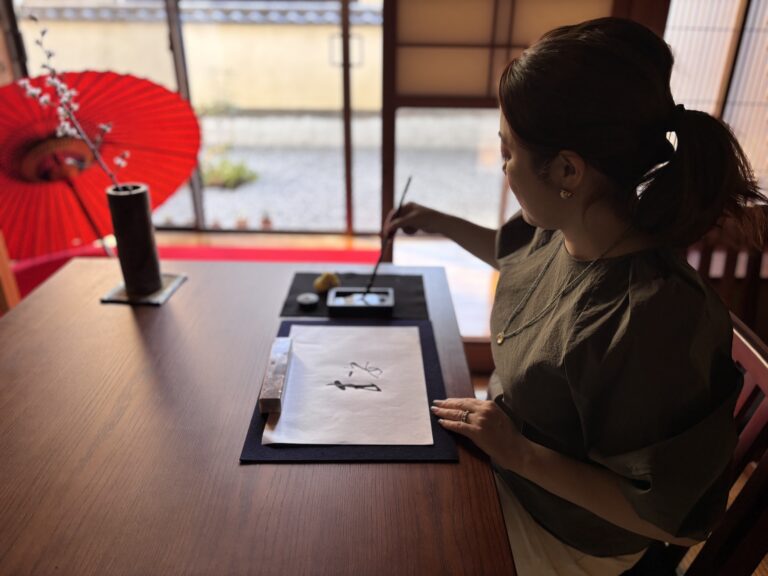
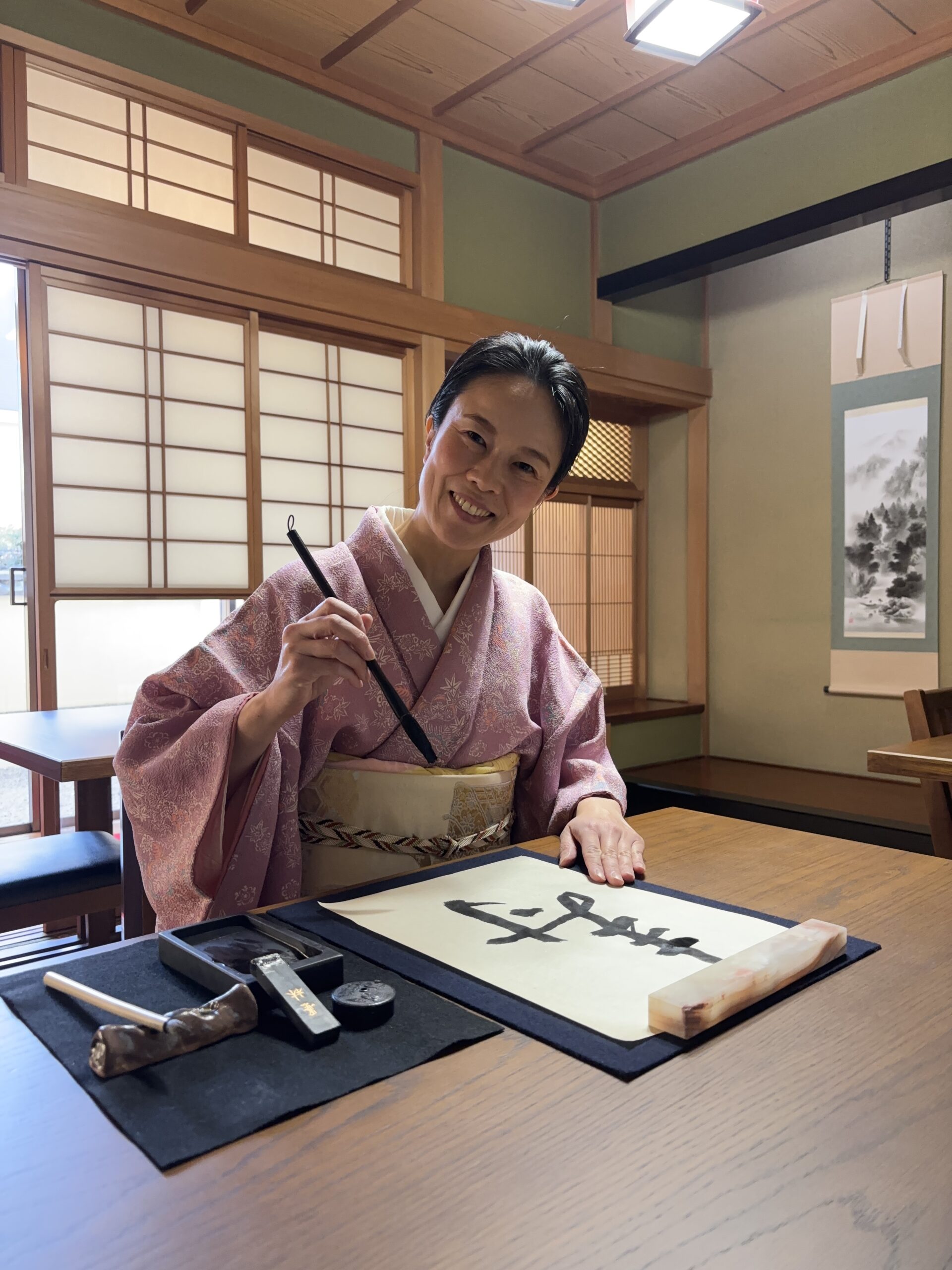
At our salon, we invite you not only to look at calligraphy, but to experience it by writing.
By holding the brush, feeling the ink, and moving your body slowly and quietly, you may discover your own way of appreciating calligraphy—with curiosity and joy.