Questions about Sado, the Tea Ceremony: Can’t we drink together?
During the tea ceremony, some guests kindly smile and say,
“Let’s drink together.”
It’s a warm and generous invitation—and in fact, within the Japanese tea ceremony, there is a tradition in which the host drinks matcha in front of the guests. This practice is called oshoban.
However, oshoban may be quite different from what many people imagine as “drinking together.” To understand why, it helps to know a little about the flow and history of the tea ceremony.
The Role of the Main Guest and the Shared Tea Bowl
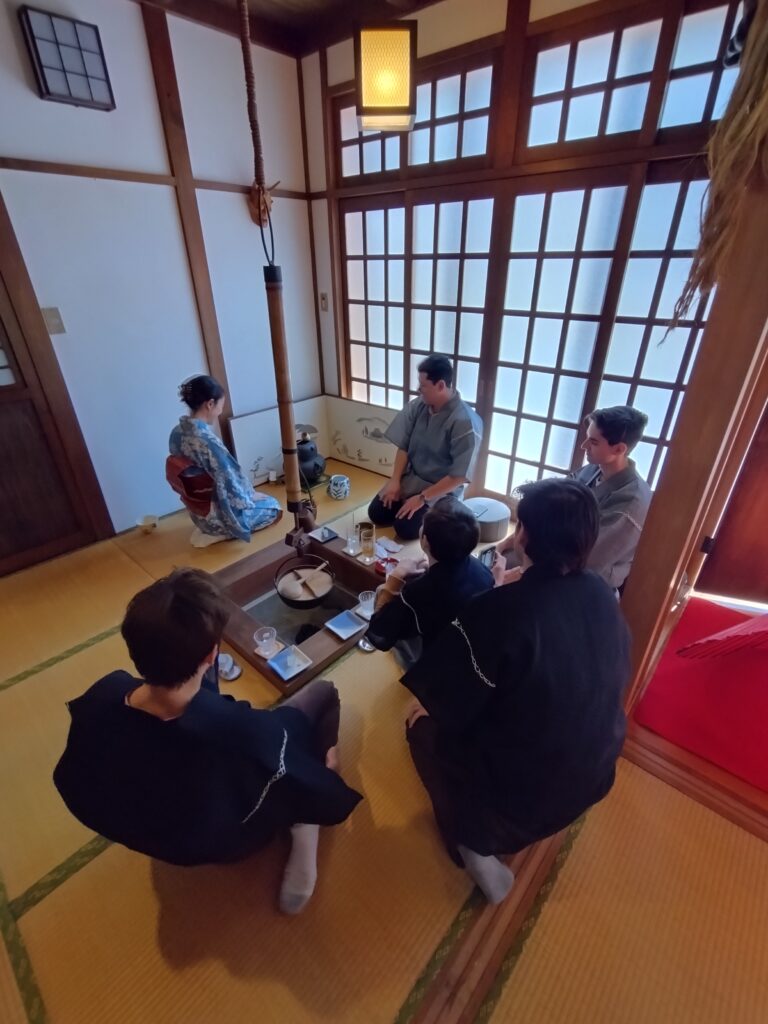
Traditionally, a tea ceremony uses a single tea bowl, shared by all guests in turn.
Among the guests, one person is designated as the shokyaku, or main guest. There is only one shokyaku in each ceremony. The shokyaku enters the tearoom first, drinks the tea first, and represents the group in conversation with the host.
This role becomes easier to understand if you picture Japan several hundred years ago. When the tea ceremony took its present form, Japan was divided into many small feudal domains, each ruled by a lord—the highest-ranking samurai. The lord would walk at the front and be served first, while others followed as companions or attendants. The shokyaku symbolically reflects this historical image.
In modern tea ceremony practice, there is no social hierarchy among guests. The role of shokyaku is often taken by the most experienced or senior practitioner present, but there is no master–servant relationship. Today, it is simply a ceremonial role that helps maintain the structure and rhythm of the gathering.
The shokyaku drinks first. The host then gently rinses the tea bowl with hot water, wipes it clean with a cotton cloth, and prepares the next bowl of matcha for the following guest. In this way, the same tea bowl is passed from person to person. Traditionally, this means no one can drink until the previous guest has finished.
After the final guest has enjoyed their tea, the shokyaku may ask the host,
“Would you care to have some tea yourself?”
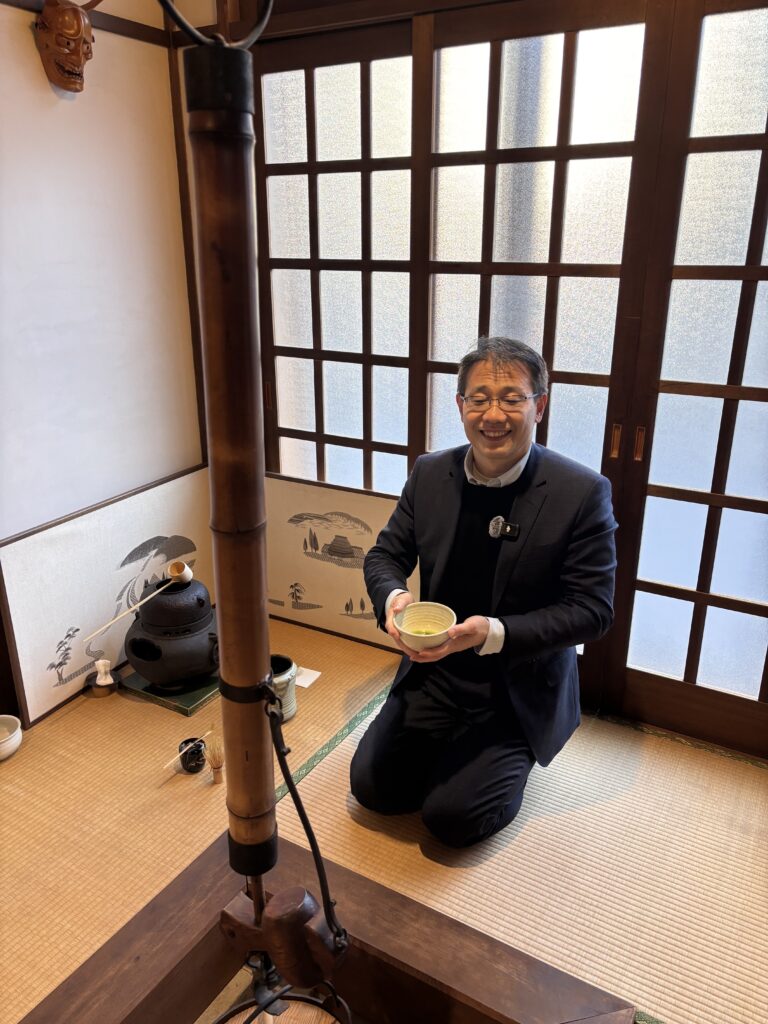
If the host accepts, he or she prepares matcha in the very same bowl used by all the guests and drinks it in front of them. This moment is called oshoban—a quiet gesture of shared completion rather than a casual toast.
How Matcha Is Served at My Salon Today
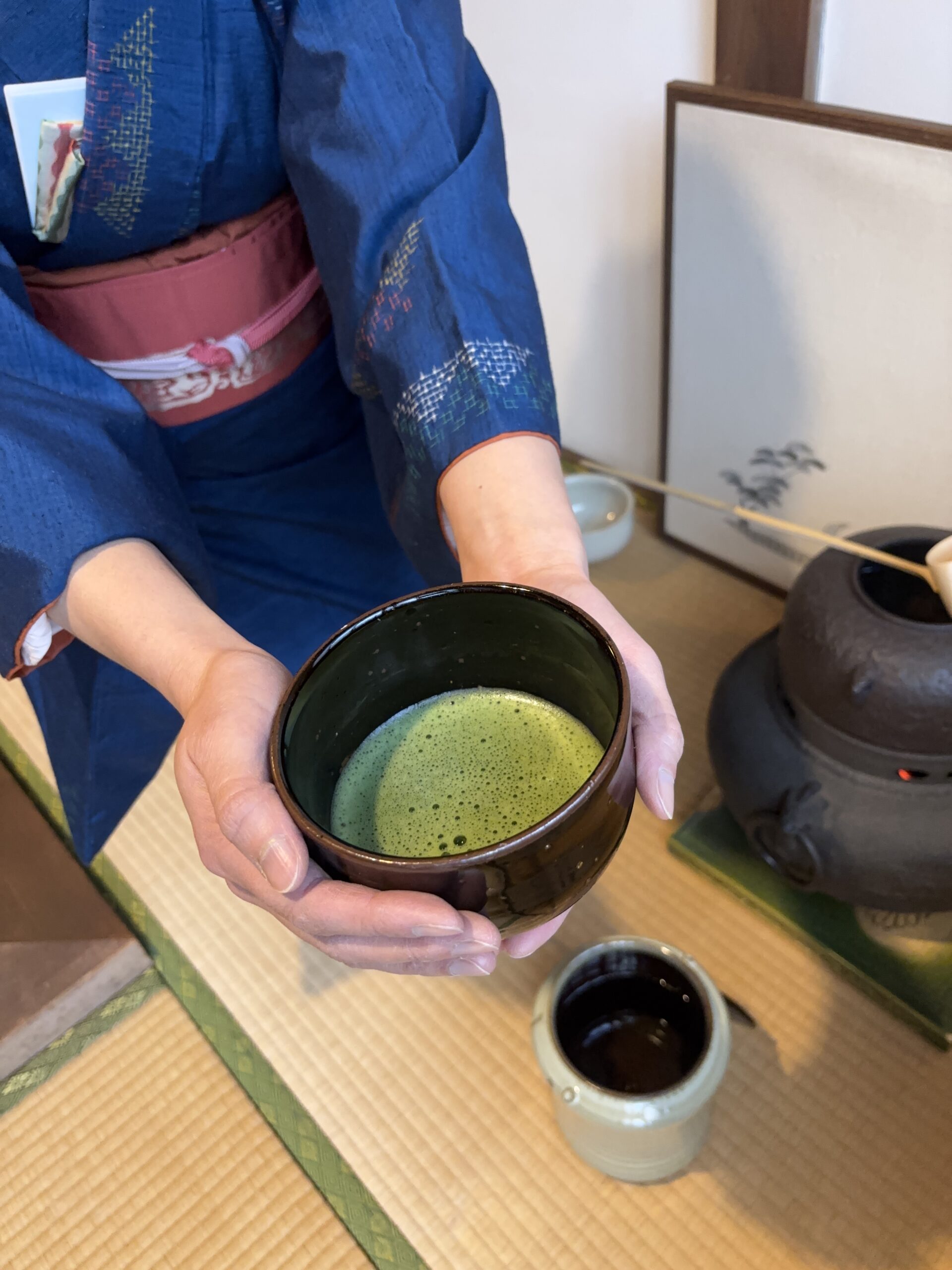
Since the COVID-19 pandemic, many people understandably feel hesitant about sharing a single tea bowl. For this reason, at my small salon in Tokyo, I prepare matcha in an individual tea bowl for each guest.
Even so, the spirit and order of the tea ceremony remain unchanged. I still prepare each bowl one by one, beginning with the shokyaku and continuing in sequence. Rather than serving everyone at once, each guest is offered matcha as soon as it is freshly prepared.
In the tea ceremony, matcha is served in a small but concentrated amount—closer to an espresso or a single shot than to a large cup of tea. It is meant to be enjoyed in just a few sips, without waiting. Because matcha is finely ground tea leaves rather than a fully dissolved beverage, it will settle at the bottom and lose its freshness if left too long. Drinking it and finishing it immediately is the best way to experience its true flavor.
Why I Usually Don’t Drink Matcha During the Experience
By the time it would traditionally be appropriate for the host to drink, all of the guests have usually finished their matcha. I also feel it would be unkind to keep guests waiting.
More importantly, I cherish the time spent talking together—answering questions, sharing stories, and explaining the deeper meanings behind the tea ceremony. As I run this salon on my own, these conversations are an essential part of the experience I wish to offer. For these reasons, I usually refrain from drinking matcha myself during the session.
Please don’t worry—I drink plenty of matcha during my own daily practice.
After all, it truly is delicious.