Questions about Shodo, Japanese Calligraphy: What Does It Mean to “Grind Ink”?
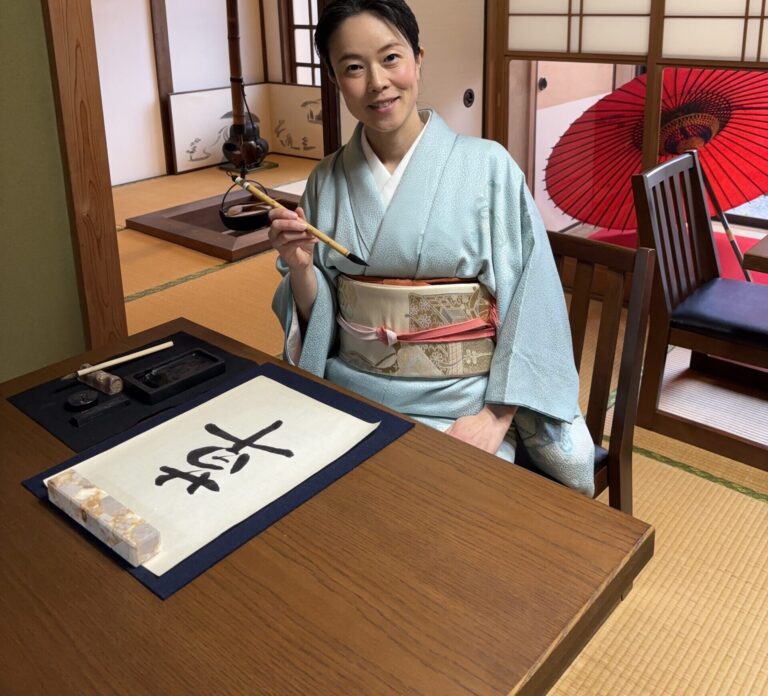
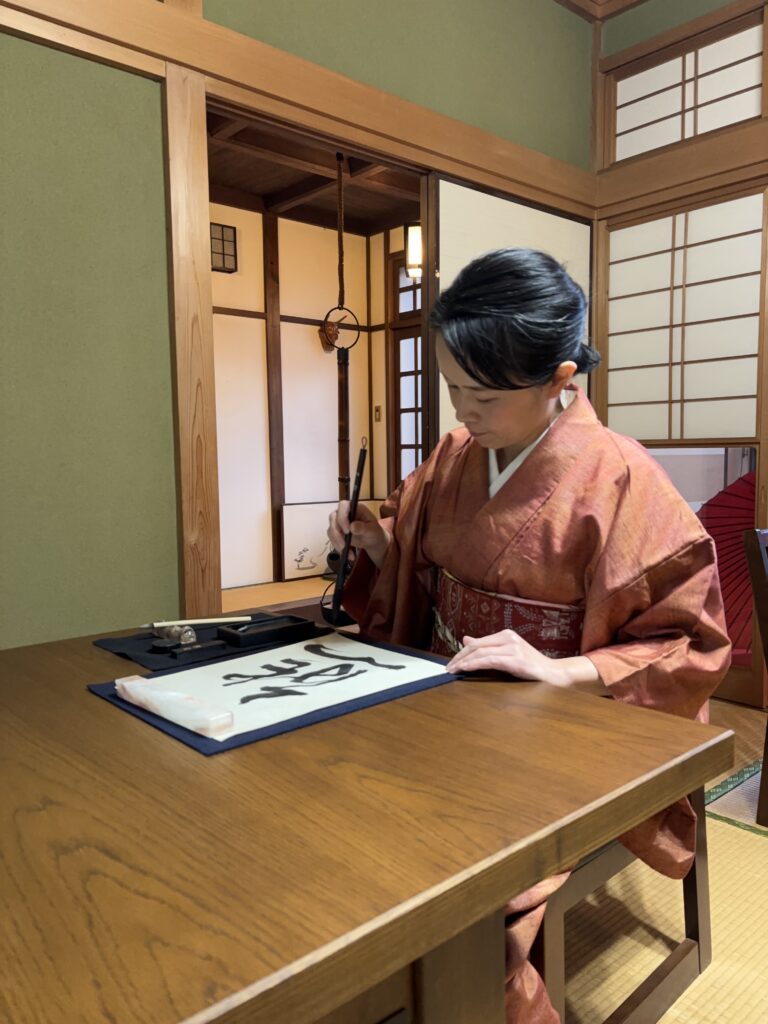
When you join our calligraphy experience, the first thing you do is not writing.
We grind ink.
From Water to Ink
A solid ink stick might look unfamiliar at first. You can hold it in your hand without getting dirty. But when you place a few drops of water onto an ink stone and begin to move the ink stick gently, something begins to change.
An ink stone is a traditional tool most often made of stone, used both for grinding ink and holding it while you write. The flat area is called oka or hill. It feels smooth to the touch, but it has very fine textures designed especially for grinding ink. This surface is used only for that purpose—never for the brush.
Just add a small amount of water, about a few drops. Then, holding the ink stick lightly, you begin to draw slow circles on the hill. There is no need to press hard, and no need to rush.
Watching the Change
As you continue, the clear water gradually thickens. Some guests notice a soft gloss appearing on the surface. Because our ink stones are black, the color change can be subtle—but the transformation is there.
Traditional ink sticks are made from soot and natural glue. The soot comes from burning materials such as pine wood or rapeseed oil. Making ink sticks takes time; even after shaping, they must dry for months. Some guests are surprised when they learn how long this process takes.
A Small Moment of Meditation
Ink sticks are also gently scented. Many people who have practiced calligraphy before say, “I love the smell of ink.” This fragrance is added intentionally. As you breathe it in and watch the water turn into ink, your body and mind begin to prepare for writing.
Grinding ink is both focused and relaxing. With your attention resting on one small point in the ink stone, it becomes a short moment of meditation. Even though it lasts only a few minutes, many guests tell us it is one of the most memorable parts of their experience. Words like “relaxing” and “refreshing” come up often.
Liquid Ink and Freshly Ground Ink
In our salon, we also provide liquid ink. We want our guests to spend as much time writing as possible, and liquid ink is convenient when you need more ink quickly.
However, when writing on wood, we recommend grinding ink yourself.
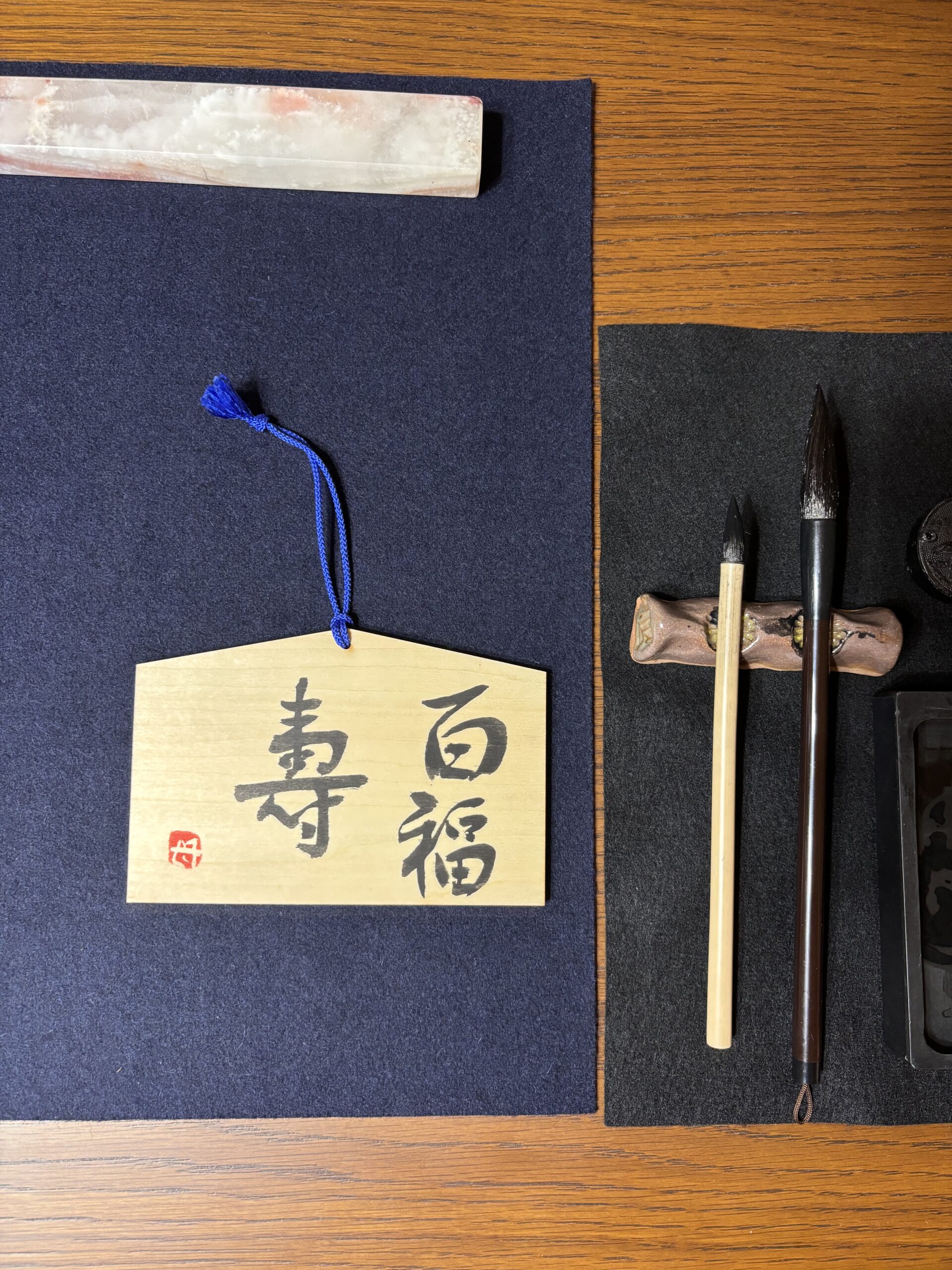
We offer small wooden items such as ema plaques, gourds and traditional paddle-shaped boards. Because they are small, about five minutes of grinding is enough to make sufficient ink. That said, five minutes can feel surprisingly long.
Why do we have to go to all this effort? The reason is simple. Liquid ink tends to soak deeply into the wood grain, causing the lines to bleed and spread. The result is often less clear and less beautiful.
Freshly ground ink from the ink sticks behaves differently. Its thickness, created by natural glue, and its slightly larger ink particles make it harder for the ink to seep into the wood. This allows the lines to stay more clear and sharp on the surface.
Try It Yourself
In our calligraphy experience, you can try grinding ink and writing on wooden boards as well (wooden items are available for an additional fee).
Why not experience Japanese calligraphy in a traditional Japanese house in Ikenoue, just four minutes by local train from Shibuya?