Seasonal Shodo Moment: “Ara touto” — Basho in Nikko
This summer, I’m practicing words inspired by Oku no Hosomichi (“Narrow Road to the Far North”) by the haiku poet, Matsuo Basho.
Nearly 340 years ago, Basho left Edo (old Tokyo) and began a long journey across northern Japan with his student Sora.
What makes Oku no Hosomichi fascinating is that it’s not just a travel diary — it’s a carefully crafted literary work, blending real travel experiences with reflection, revision, and imagination.
In a way, Basho was like an Edo-period travel writer or blogger — traveling, observing, and transforming moments into poetry.
A Haiku in Nikko
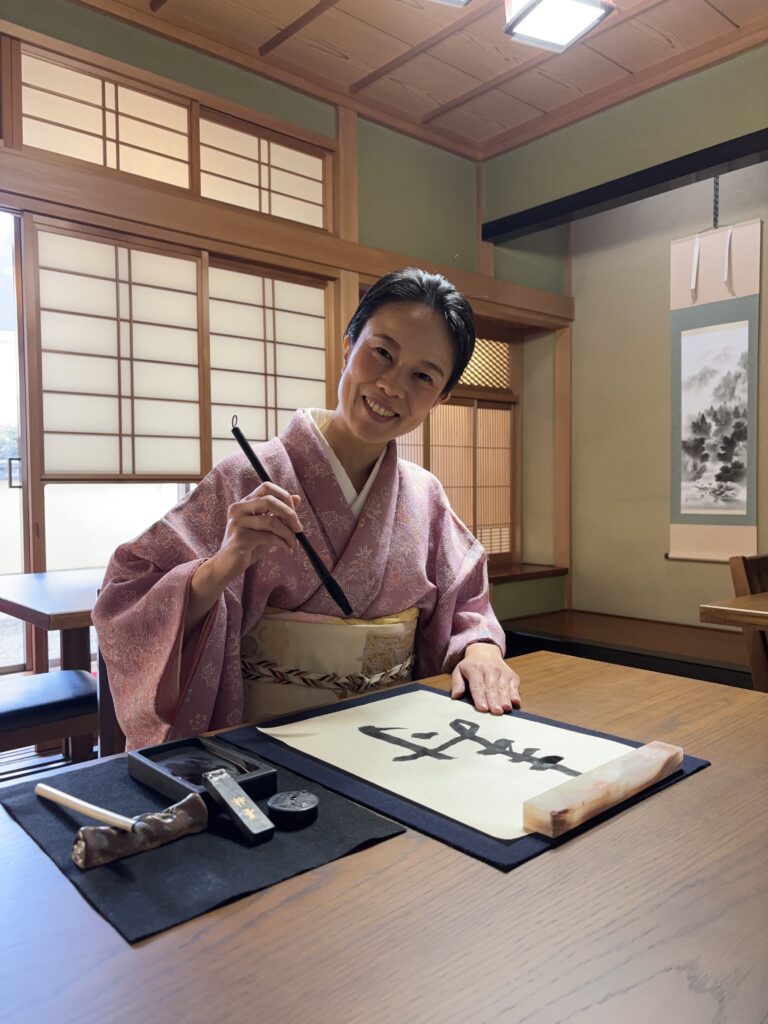
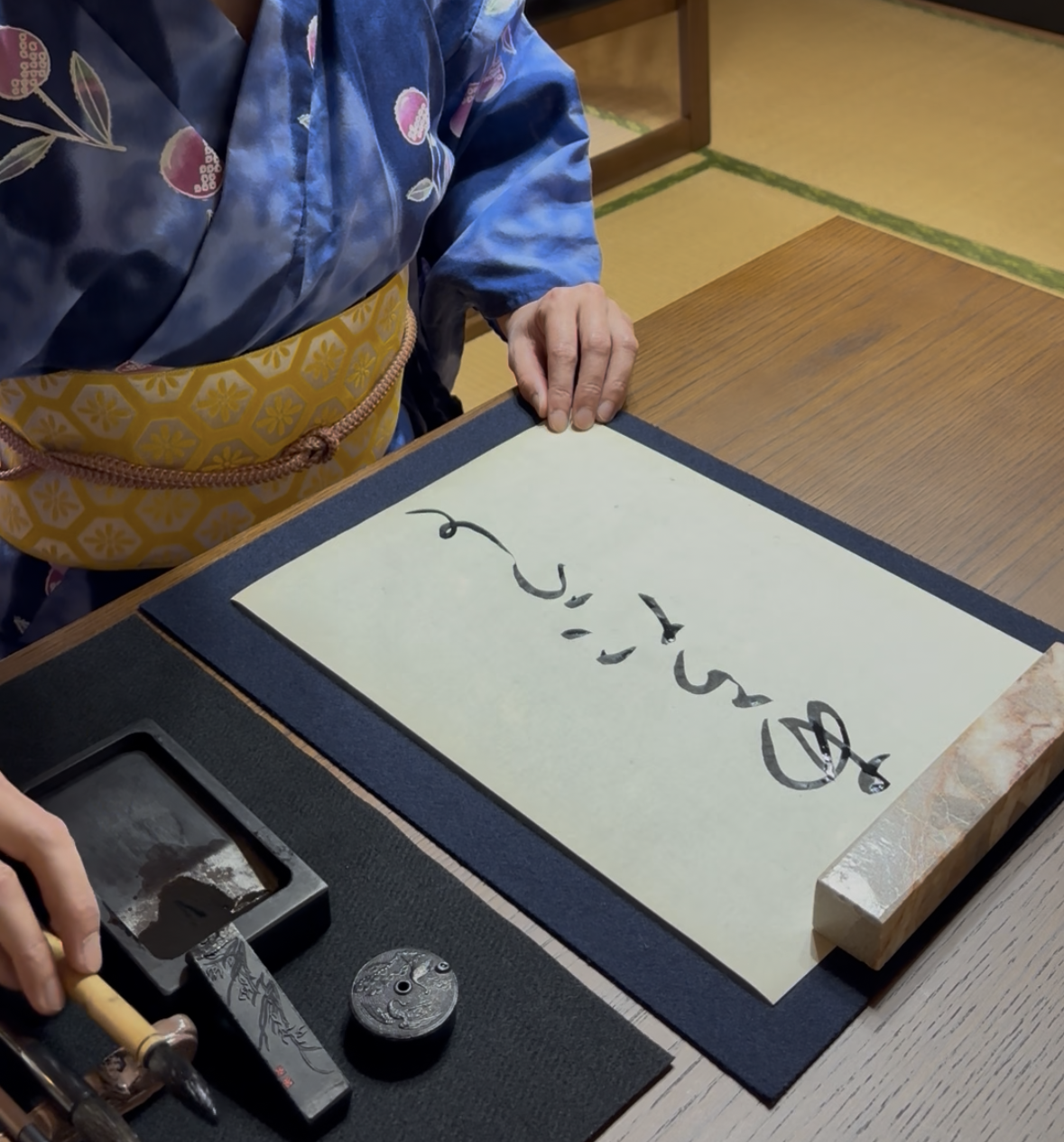
This week in my seasonal shodo practice, I explored the third haiku from Oku no Hosomichi.
The poem is:
あらたうと
青葉若葉の日の光
Ara touto
Aoba wakaba no
Hi no hikari
A loose translation might be:
Ah, how sacred—
the sunlight, falling on fresh green leaves.
I can clearly picture the vibrant, yellowish-green young leaves of this season.
This haiku was written when Basho arrived in Nikko during his famous journey through northern Japan in the late 17th century. According to Oku no Hosomichi, he reached Nikko only three days after leaving Senju, in what is now Tokyo.
When I look at a modern map, that journey feels almost unbelievable.
From Senju to Nikko is roughly 120 kilometers (75 miles). If someone walked continuously at around 4 km per hour without accounting for hills or rest, it would still take around 30 hours of walking. Every time I think about this, I wonder: could I walk 40 kilometers a day for three days in a row? Honestly… probably not. Especially with my modern lifestyle and very questionable fitness level.
Ninja Legends and the Question of Age in Basho’s Time
Because Basho was originally from Iga — a region famous for ninja history — there is a long-running and rather entertaining theory that he may have secretly worked as a spy while traveling Japan disguised as a poet.
Yes, “Basho the ninja” is apparently an interesting theory.
But historians generally dismiss the idea. Records suggest that his travel pace was quite normal for people of that era. In other words, people in Edo-period Japan were simply much more accustomed to walking long distances than we are today.
Still, imagining a middle-aged poet wandering across Japan on foot somehow makes the poems feel even more alive.
Basho was about 45 years old during this journey — a little older than I am now. Although, comparing ages across centuries is not entirely straightforward. The level of medical care is just so different.
Until around 1950, Japan traditionally counted age differently from the modern Western system. A baby was considered one year old at birth, and everyone became one year older together on New Year’s Day. So when we read historical ages in Japan, they can feel one or two years different from our modern understanding of age.
So the custom of celebrating personal birthdays in Japan is actually relatively recent — roughly from our grandparents’ generation onward.
Nikko and the Peace Behind Poetry
Now, a little about Nikko itself.
Long before it became a famous sightseeing destination, Nikko was a sacred mountain region centered around Mount Nantai, also called Futarasan. The mountain was worshipped as a divine presence, and today Nikko Futarasan Shrine remains well known as a place associated with relationships and matchmaking blessings.
Nikko is also home to the magnificent Nikko Toshogu Shrine, where Tokugawa Ieyasu — the founder of the Tokugawa shogunate that brought peace and stability to Edo-period Japan — is enshrined as a deity.
Before writing this haiku, Basho also expressed gratitude for the peaceful world created by Ieyasu, who is enshrined at Nikko Toshogu Shrine. During the Edo period, Japan was ruled by the Tokugawa family, who succeeded Tokugawa Ieyasu, the unifier of Japan who brought an end to the Sengoku period (Warring States period). With the end of war, people were able to live in relative peace and security, and various cultures flourished. Basho was able to travel, observe, and compose haiku because it was an unusually peaceful era for its time.
Experience Japanese Traditional Culture in Tokyo
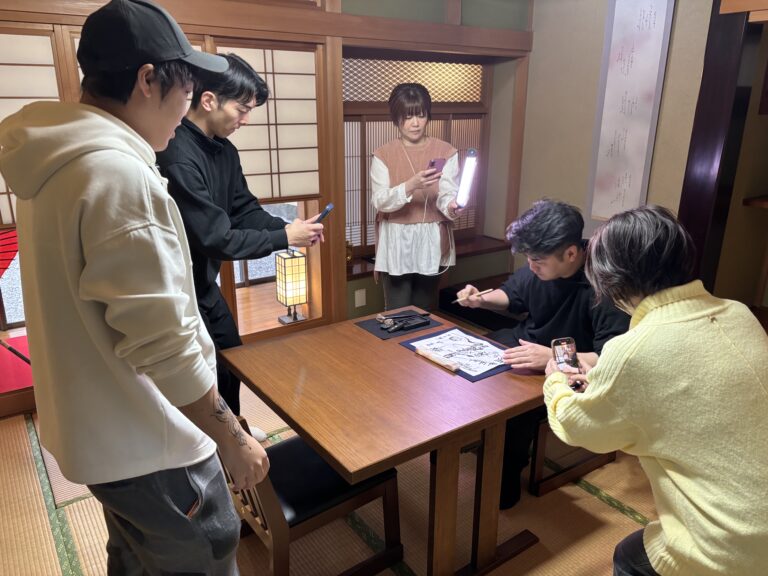
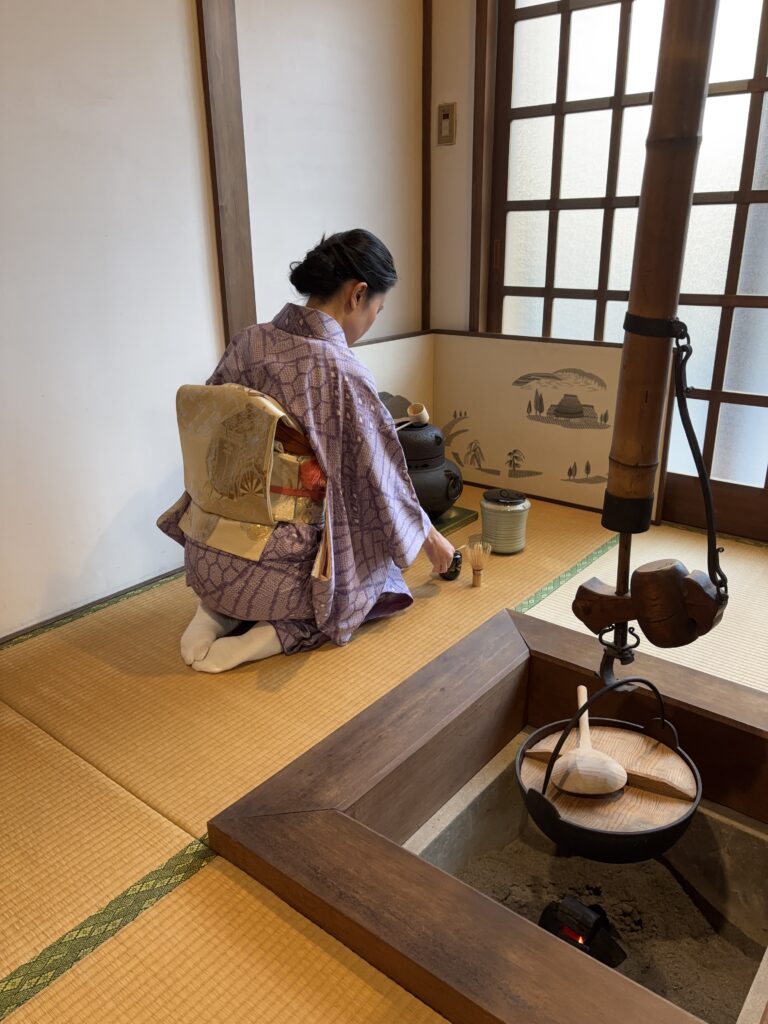
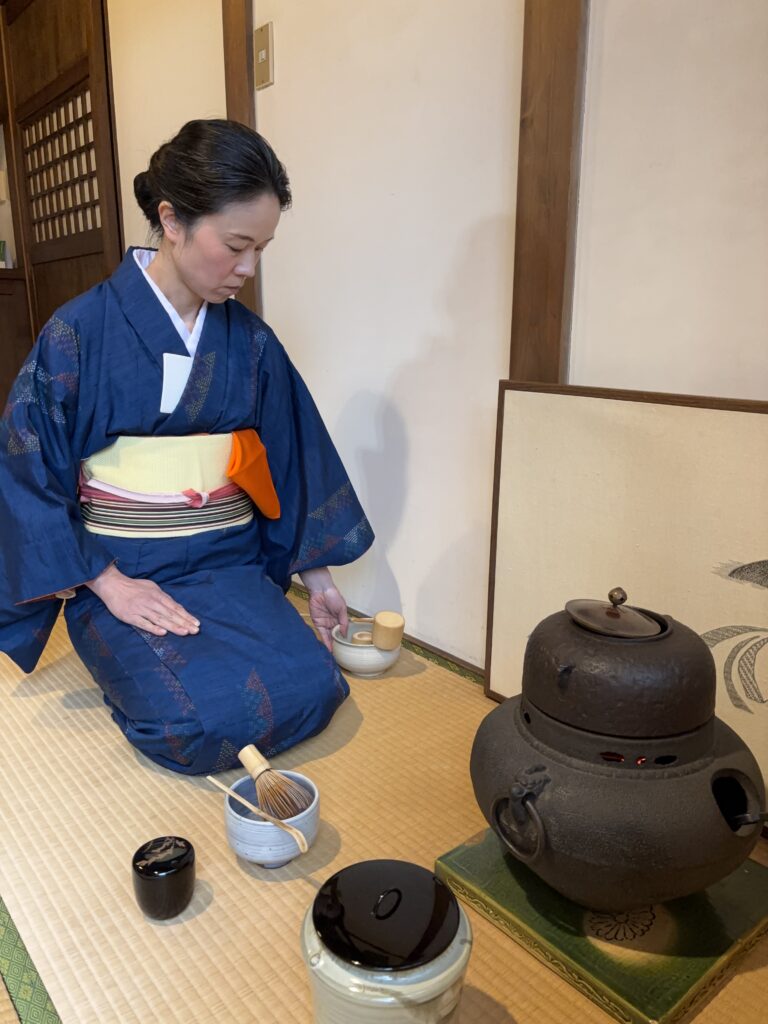
At Oh! Mama, guests are invited to experience both shodo and Japanese tea ceremony in a relaxed atmosphere.
Through seasonal poetry, brushwork, and tea, we hope to share a deeper and more personal encounter with Japanese culture.