Questions About Sado, the Tea Ceremony: Is it Related to Religion?
This question came from one of my thoughtful guests the other day.
The short answer is: yes, it is. However, when practicing tea ceremony, it’s not something I am usually very conscious of.
The Connection to Zen Buddhism
The Japanese tea ceremony is closely connected to Buddhism—especially Zen Buddhism. You may have heard the word “Zen.” It is one branch of Buddhism.
Tea itself was brought from China to Japan by Zen monks, along with Zen teachings, and gradually became widespread.
One of the most important practices for Zen monks is zazen, or seated meditation. If you have ever tried meditation, you might understand that it can make you sleepy. To help stay awake during long hours of meditation, tea—containing caffeine—became highly valued among monks.
It may sound a bit like college students drinking coffee to stay awake before a deadline, but this is actually a well-known historical fact, even mentioned in publications by the Omotesenke school of tea. (If you’re interested, you can take a look at the booklet here in English.)
Moments When Religion Appears in Tea Practice
In regular tea practice, there are not many moments when we consciously think about religion. However, one such moment might be when we view a hanging scroll (kakemono) in the tea room, especially those written by Zen monks.
These works are called bokuseki, and they are considered the most prestigious type of scroll in the world of tea. Even if a monk’s calligraphy is not technically “beautiful,” the work is deeply respected because it was created by someone who has undergone rigorous spiritual and physical training and cultivated virtue. In that sense, the scroll is held in the highest respect almost as if it were the monk themselves.
Often, these scrolls contain Zen phrases or symbolic expressions of Zen teachings. Tea teachers may explain their meanings during practice.
A Personal Reflection
My own teacher owned several such scrolls. Unfortunately, when I was younger, I wasn’t very interested in them. I was much more focused on enjoying delicious sweets and matcha!
Looking back now, I realize that truly appreciating these scrolls requires a quieter, more attentive mind—something I am still learning to cultivate.
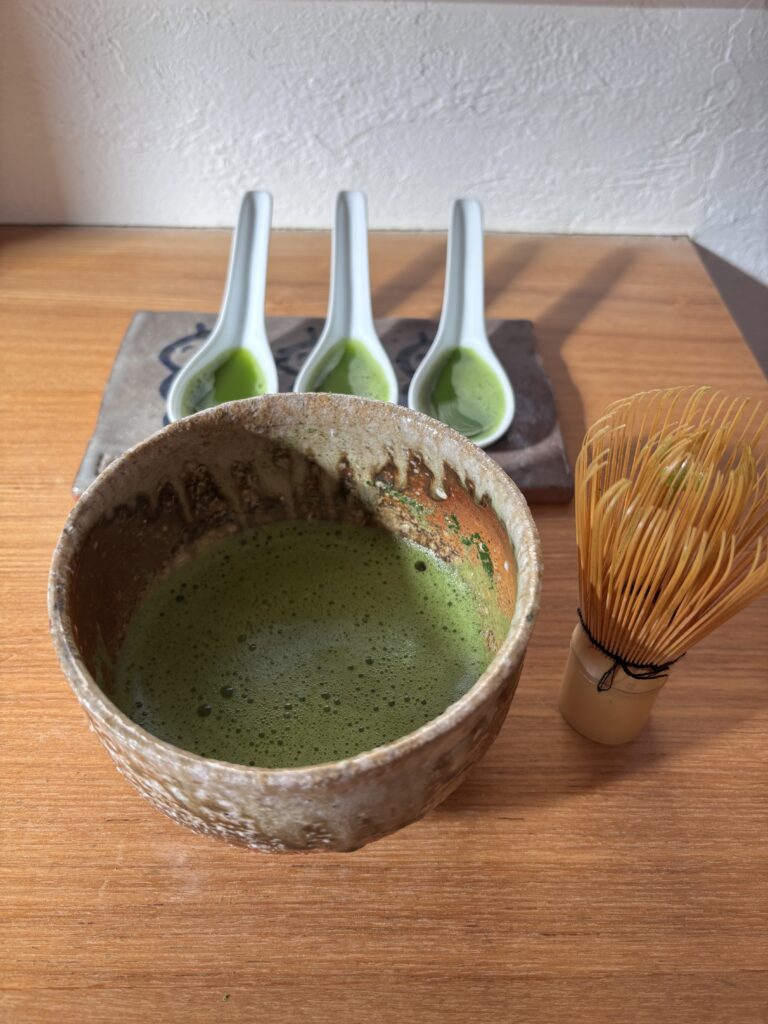
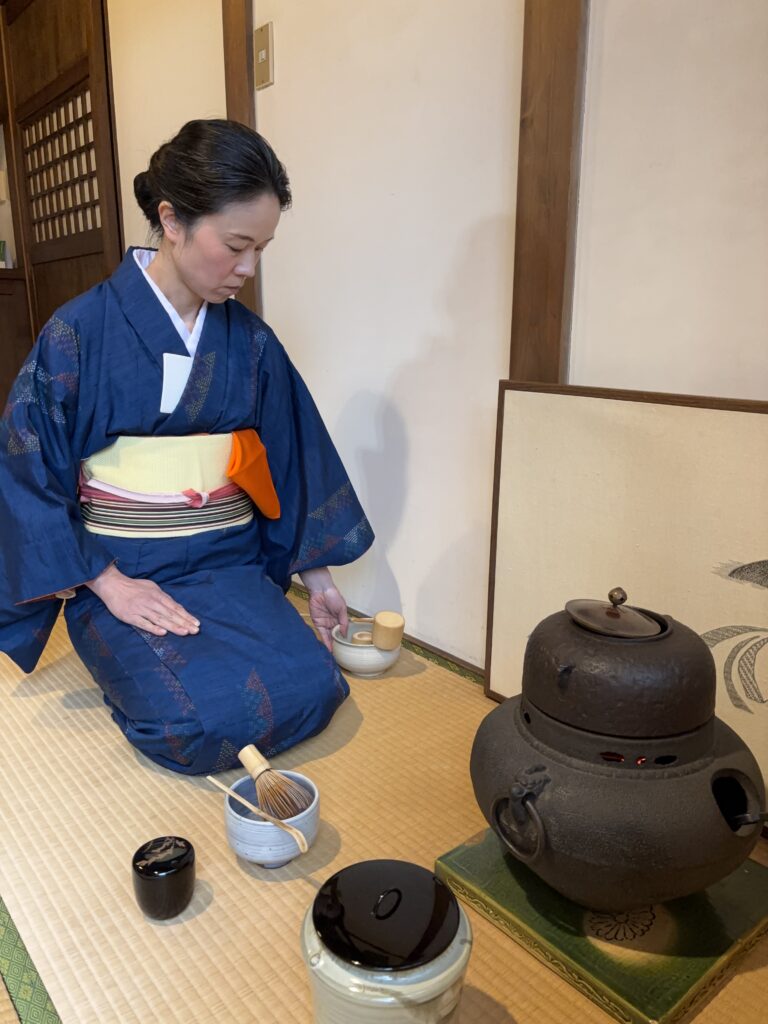
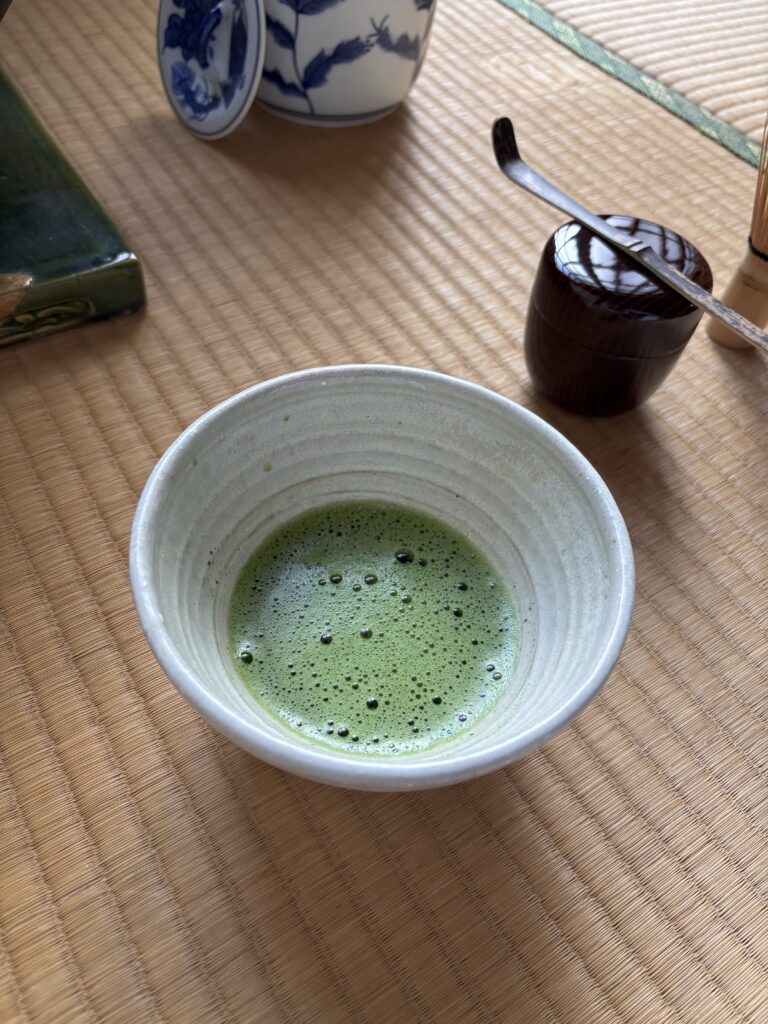
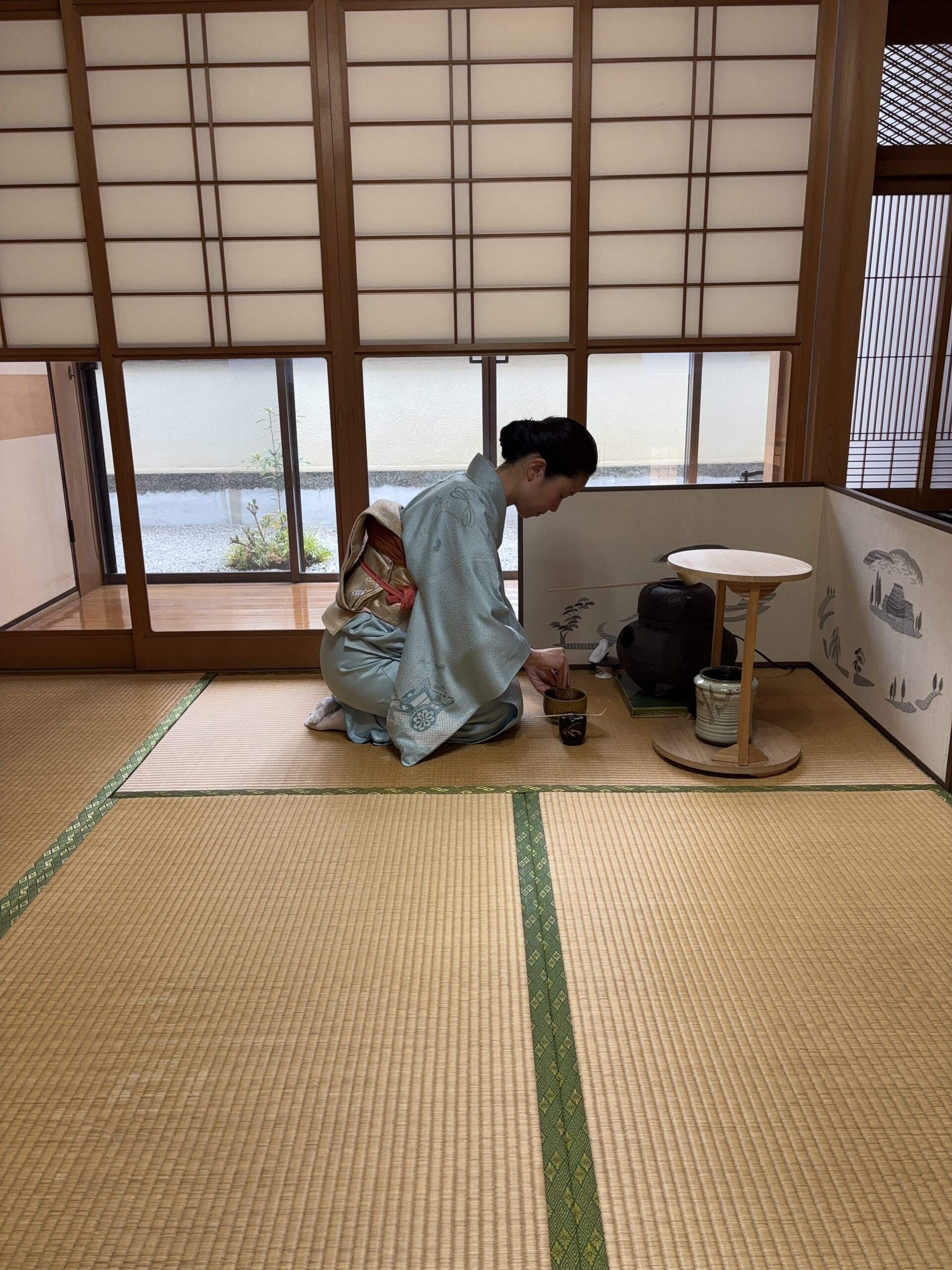
At Oh! Mama, you can experience this quiet connection to Zen for yourself through a traditional matcha tea ceremony in a calm setting.
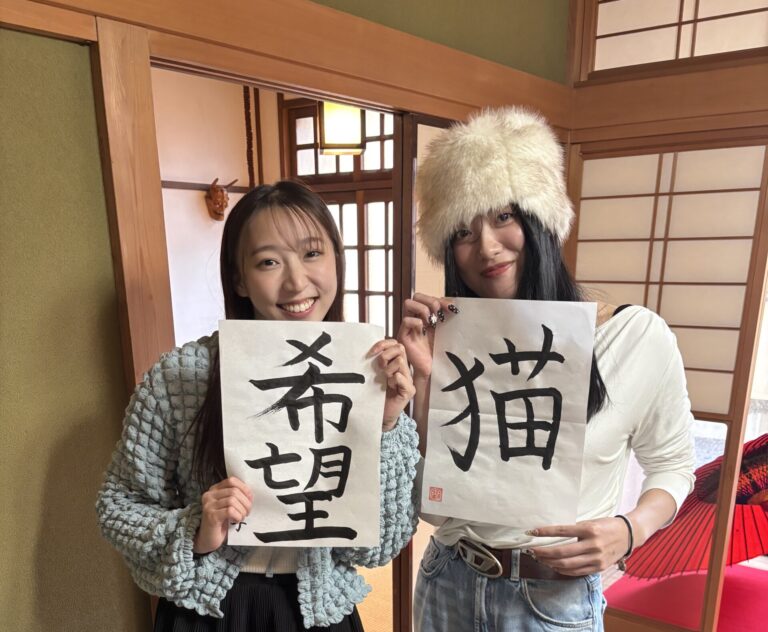
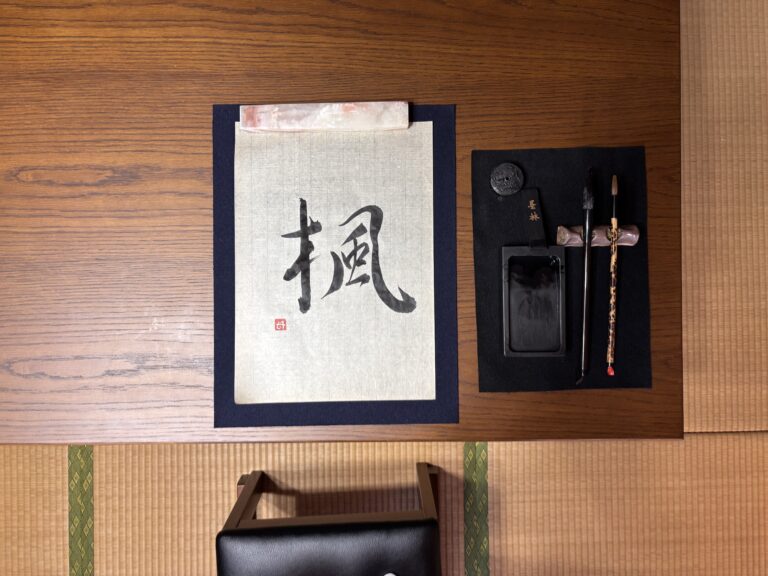
Located in Ikenoue—a peaceful residential neighborhood just minutes from Shibuya—Oh! Mama is a traditional Japanese house where you can step away from the rush of the city and slow down. In this private space, you can enjoy not only a matcha tea ceremony but also shodo (Japanese calligraphy), both deeply rooted in Buddhism.
If you’re curious to experience this world for yourself, we would love to welcome you.