Questions About Shodo: Were Hiragana and Katakana Created at the Same Time?
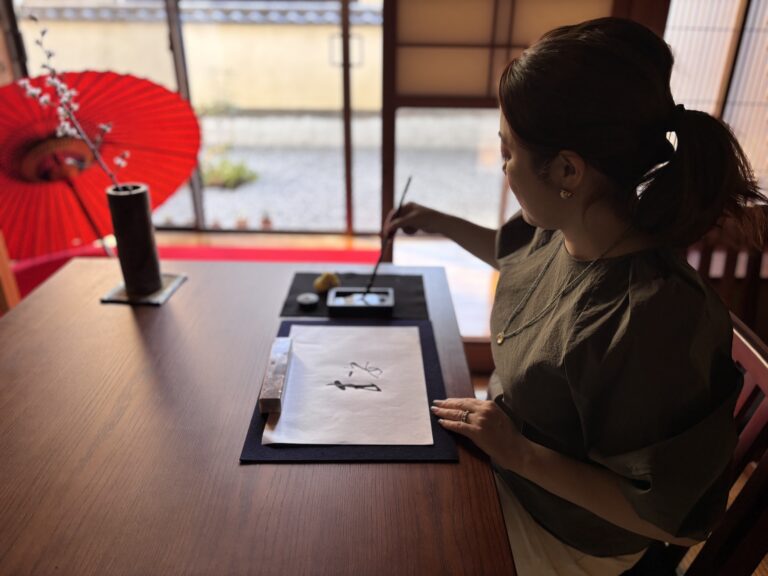
At our salon, before beginning a Shodo experience, we like to share a short story about Japanese writing.
Kanji characters were introduced to Japan from China. Later, around the 10th century during the Heian period, the Japanese created their own phonetic scripts based on kanji. These became Hiragana and Katakana.
So yes—Hiragana and Katakana were created around the same time.
Before kanji arrived, Japan had no writing system. Once writing was introduced, people quickly realized how useful it was for communication and record-keeping. However, Chinese and Japanese grammar are completely different. In order to read Chinese texts, translation was necessary. Even when Japanese people wanted to record their own stories, they had to write in Chinese.
Perhaps, after long years of using a foreign writing system, they began to wish for characters that could express their own thoughts and feelings more directly.
In one of my favorite Shodo manga, there is a scene where a teacher says,
“Maybe the Japanese created kana so they could express their hearts honestly—perhaps even to write love letters.”
I like that idea very much.
What Does “Kana” Mean?
The word kana comes from the meaning “temporary letters.”
When kanji were considered the official and formal script—called mana (true letters)—kana were treated as secondary, supporting characters. They were “temporary” in status, yet they gradually became essential to Japanese writing.
Kana has two forms: Hiragana and Katakana.
Both consist of 46 basic characters representing sounds. These characters do not carry meaning by themselves; they represent sound only. If you know the 46 basic forms, you can read and write all Japanese syllables.
Although Hiragana and Katakana were born around the same time, they were created in different ways.
Hiragana: Soft and Flowing
Hiragana developed through simplifying kanji into smooth, flowing shapes.
Kanji often have many strokes and take time to write. There was already a cursive style of kanji called sosho, but Hiragana became an even further simplification—almost the ultimate flowing form.
Today, Hiragana is mainly used for native Japanese words, grammatical endings of verbs and adjectives, and small connecting words in sentences. Because of its rounded shapes, Hiragana gives a soft and gentle impression. When something is written entirely in Hiragana, it can even look “kawaii.”
In its early days, Hiragana was mainly used by women in the imperial court. This history may also contribute to its elegant and feminine image.
Katakana: Sharp and Structured
Katakana looks quite different. It is straight, angular, and more structured—closer in appearance to kanji.
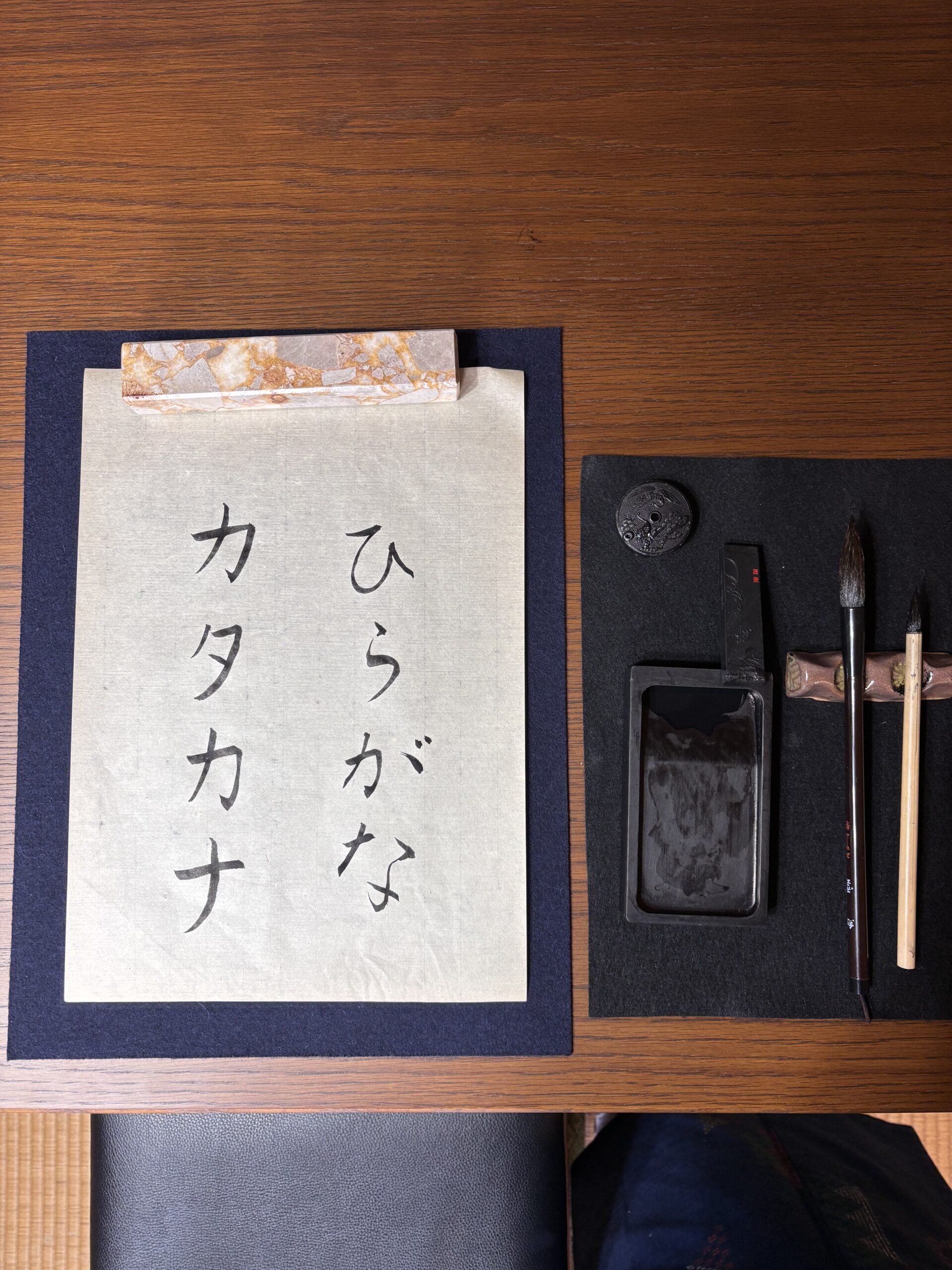
Katakana was created by extracting parts of kanji characters. For example, a portion of the kanji 加 became カ (ka), and part of 多 became タ (ta). Because these forms were taken directly from kanji components, they retain a sharp and linear feeling.
Originally, Katakana was used as reading marks when translating classical Chinese texts. Buddhist monks, who studied sutras and advanced knowledge from China, used katakana as marks to rearrange Chinese sentences into Japanese word order.
In this way, Katakana supported the reading of kanji texts—almost like small guiding symbols.
Today, Katakana is mainly used for foreign loanwords, scientific names of plants and animals, and onomatopoeia. Since most Japanese sentences are written with the combination of kanji and Hiragana, writing something in Katakana can create emphasis.
Japan has two phonetic scripts—Hiragana and Katakana—created around the same period, yet used differently.
Some visitors find it surprising that we have “two alphabets.” But when you begin to practice Shodo, you can feel that each script carries its own personality. Soft and flowing. Sharp and structured.
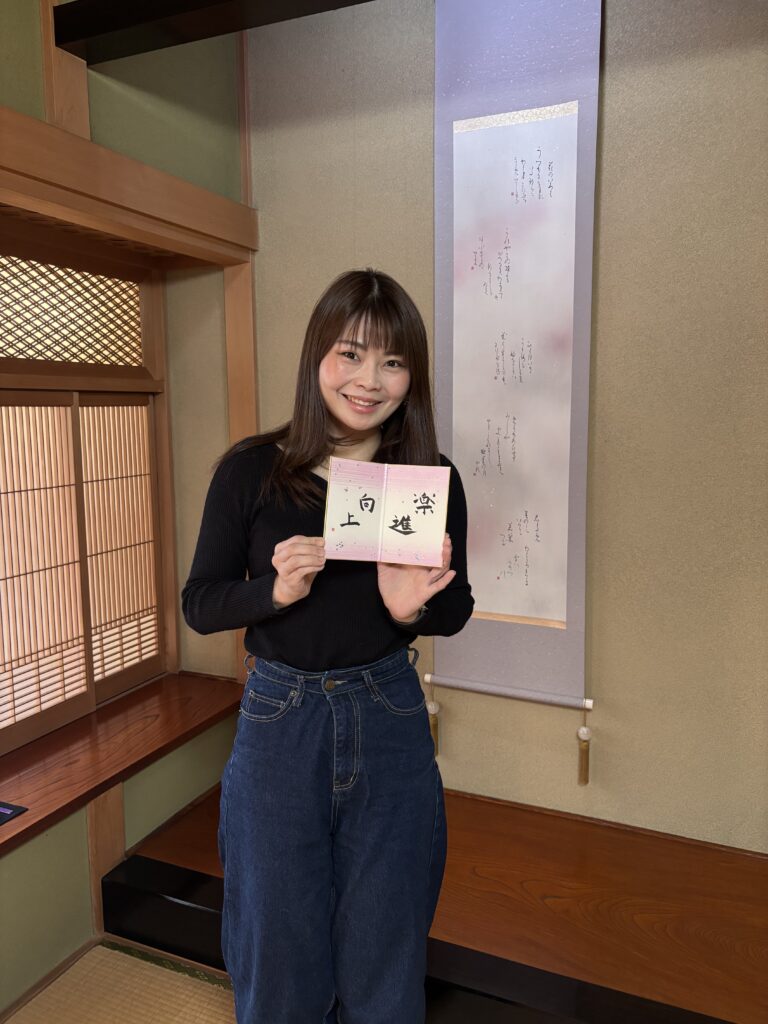
At our salon, we support our guests in writing their names in both Hiragana and Katakana. Looking at your own name and choosing which script to use can be a delightful moment.
If you would like to experience this for yourself, we would be delighted to welcome you to our salon and share the world of Shodo with you.