Questions About Shodo, Japanese Calligraphy: Do Japanese Really Write Vertically?
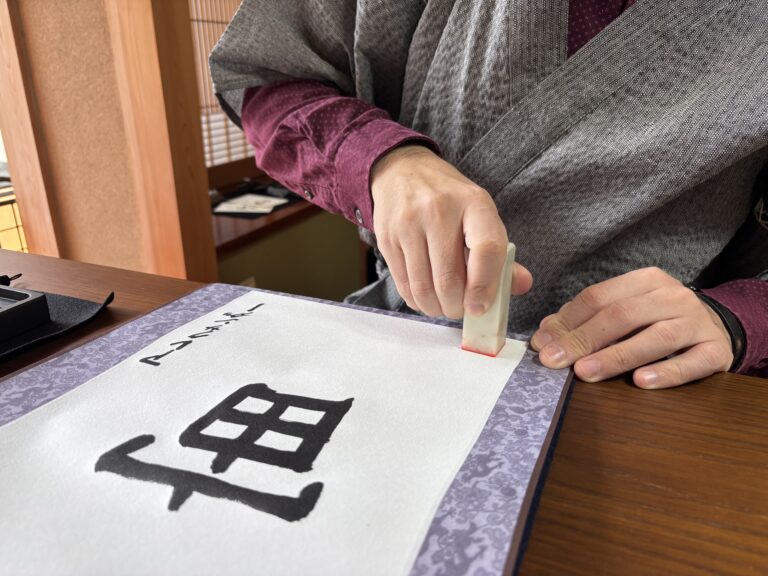
In calligraphy, anything goes—it’s an art form. So both vertical and horizontal writing are perfectly fine. However, when you visit a calligraphy exhibition in Japan, you’ll notice that most works are written vertically.
Japanese writing has two directions:
- Vertical writing: top to bottom, lines go right to left
- Horizontal writing: left to right, lines go top to bottom (same as English)
You may sometimes see shop signs or company names on trucks written from right to left. For shop signs, It’s easier to understand if you think of it this way: it’s a traditional vertical writing system with lines going from right to left, but because the font size is at its largest, there’s only one character per line, so the characters are lined up from right to left. For the right side of trucks, the writing often starts from the side of the driver’s seat—the front side of the vehicle—so the order appears reversed.
School Life: Vertical Writing for Japanese Language
My son is in 2nd grade of elementary school, and every weekend he has diary or essay homework. Traditionally, Japanese writing is vertical, so notebooks used for Japanese class (including writing articles) are written in vertical as well. Just like using an English notebook from the back, open it and start writing.
Interestingly, only Japanese language notebooks are written in vertical. For all other subjects like math, science, social studies, art, and so on, students use notebooks written in horizontal just the same as in English.
Calligraphy is also treated as a part of the Japanese language curriculum during compulsory education, so textbooks and notebooks for calligraphy are vertical, too.
Numbers: Kanji vs. Arabic Numerals
In vertical writing, numbers are usually written in kanji.
For example:
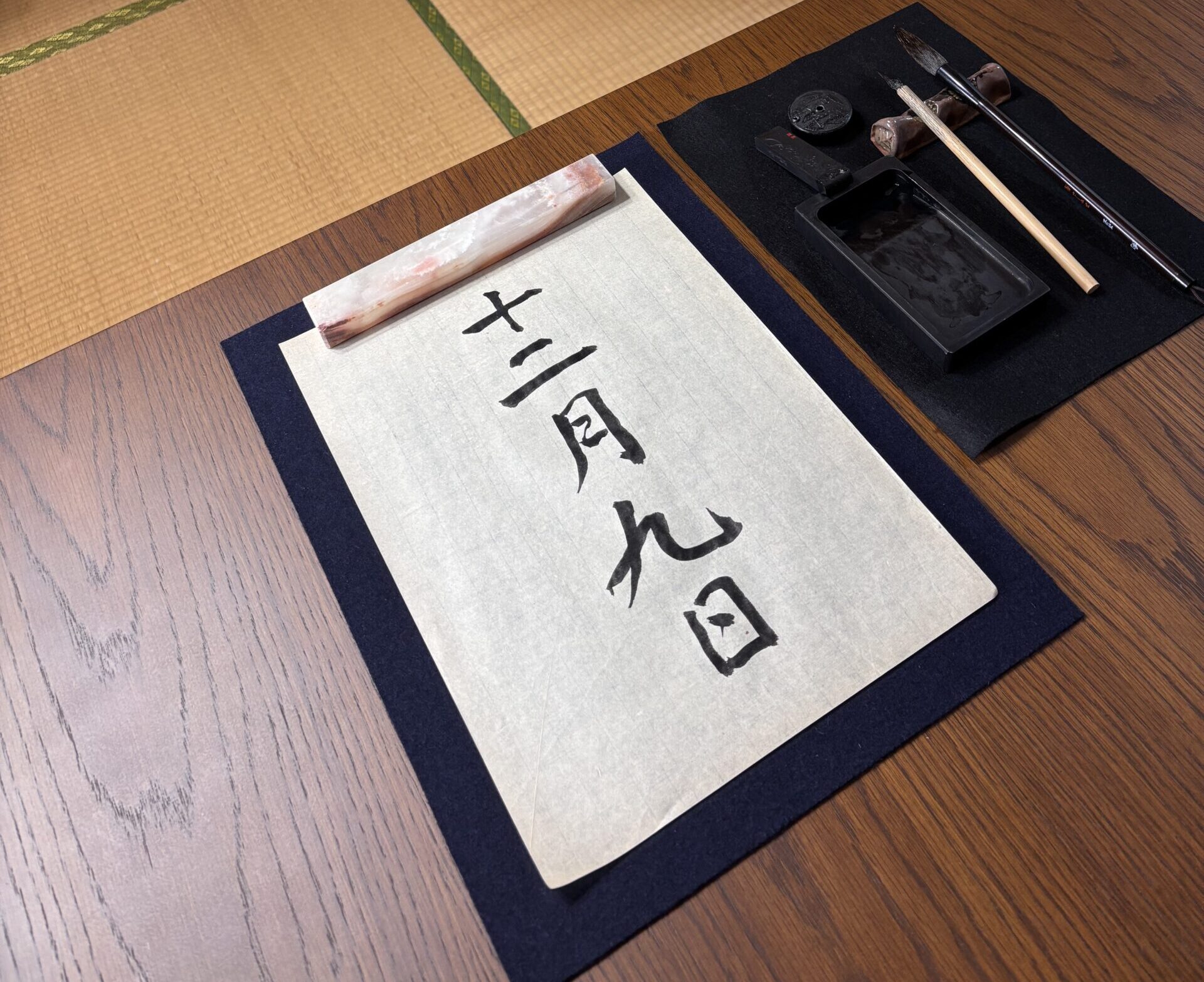
- December 9 becomes 十二月九日
- The year 2025 becomes 二千二十五年
But since most people today are used to Arabic numerals, years are often written like 二〇二五年 (2025 year) in some manga to make them easier to read. (By the way, most Japanese manga are written vertically.)
When writing horizontally, just like in English, Japanese uses Arabic numerals:
2025年12月9日 (In Japanese we write the date in order of year, month, and day. December 9, 2025.)
I saw a Japanese textbook for the native English-speaking students. It was written horizontally, but the conversation sections still used kanji numbers. Perhaps the publisher wants students to learn kanji numbers even though they aren’t used very often in modern life!
Elementary School Students Learn Kanji Numbers First
Children in Japan learn their first set of kanji numbers in first grade:
一二三四五六七八九十、百、千 (one to ten, hundred, and thousand)
They also learn the kanji for the Japanese currency “yen” (円). These days, very few stores write prices in kanji, but children need to understand them—otherwise they might have trouble buying things.
It reminds me of when I traveled to Thailand over 20 years ago. All the prices at the market were written only in Thai! I had no idea how much anything cost. Thankfully, today we can just use translation apps, and life is much easier.
When You Visit Japan…
If you come to Japan, try visiting a bookstore. Even if you can’t read Japanese, don’t let that stop you! Japanese books can be vertical or horizontal, and they even open from different sides depending on the direction of the writing. Just picking up a vertically written book in a Japanese bookstore might become one of your most memorable travel experiences.
Curious About Japanese Writing? Try Calligraphy!
If you’ve become interested in Japanese writing, how about experiencing calligraphy at our salon? Many visitors who knew no Japanese at all have enjoyed trying calligraphy and taken home their own beautiful, hand-written artworks.