Questions about Shodo, Japanese Calligraphy: Why Write the Same Character Again and Again?
If you have ever tried Japanese calligraphy, you may have wondered:
Why do we write the same character again and again?
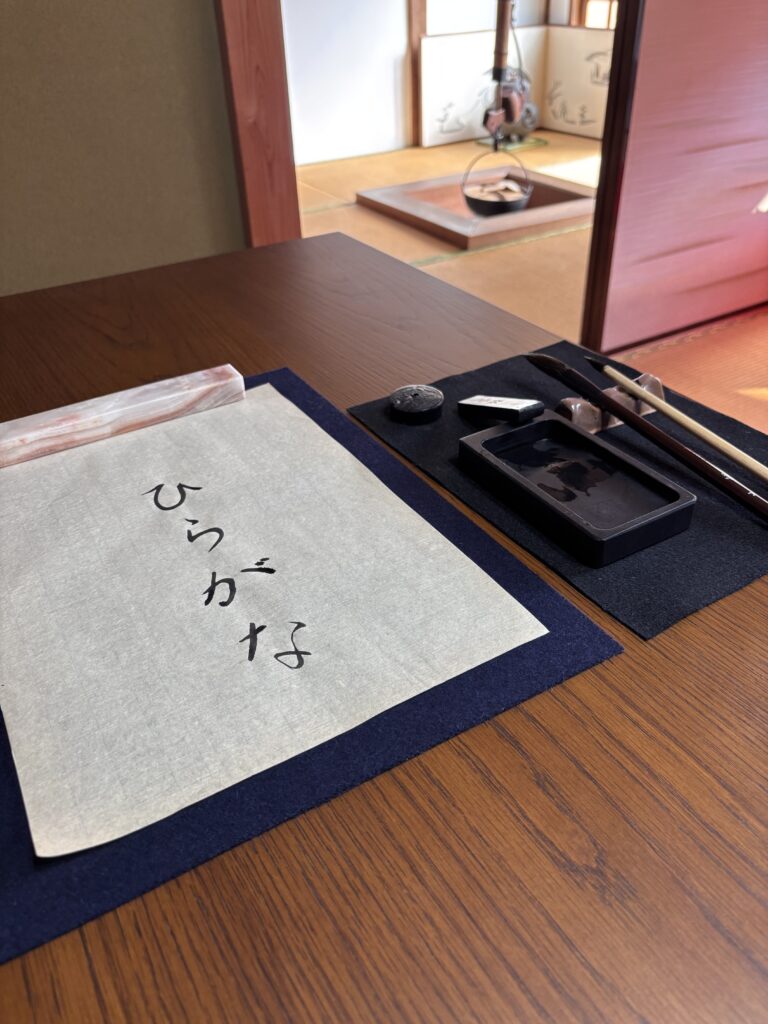
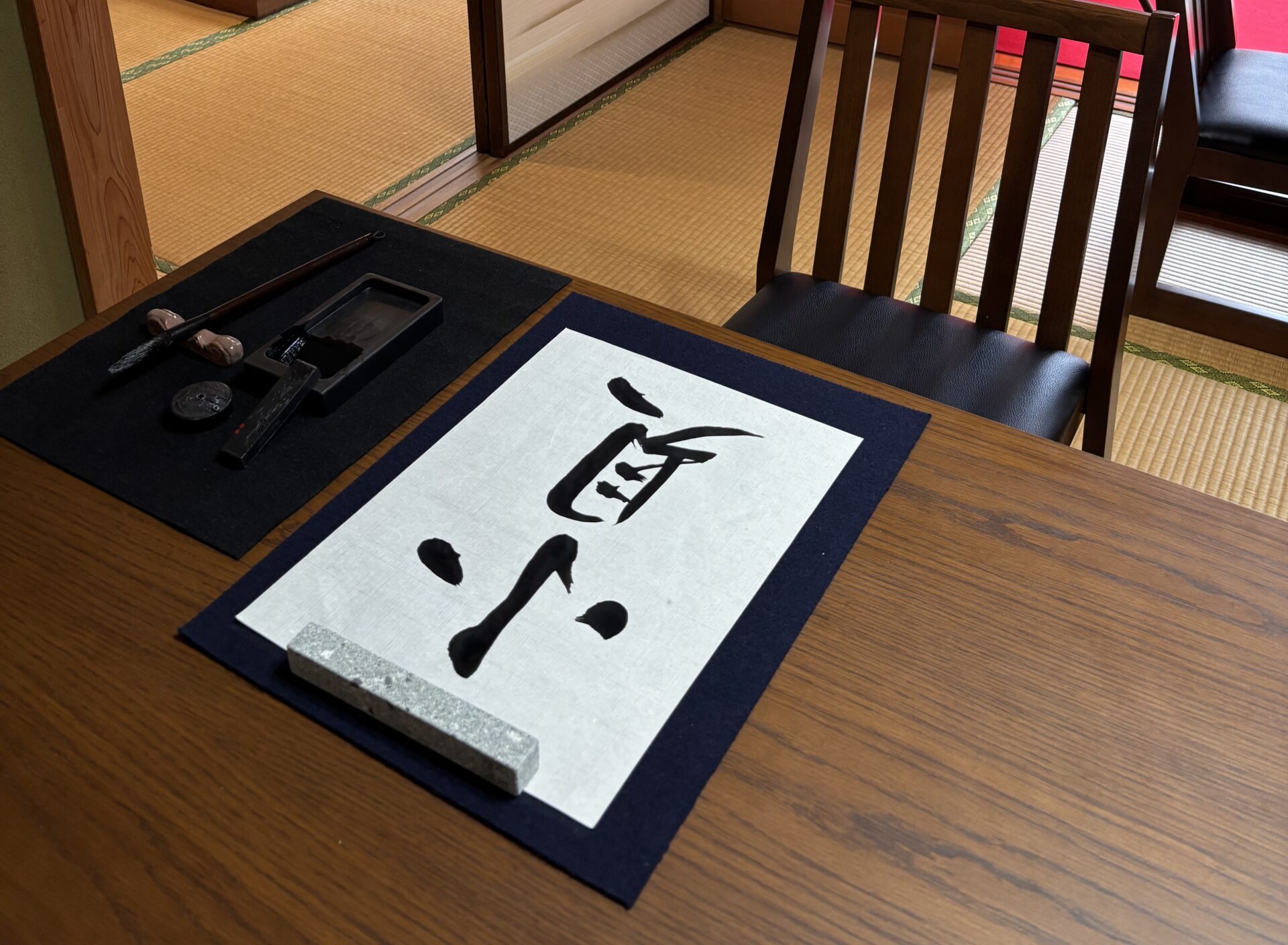
When you come to a calligraphy experience in Japan, you may write a character several times. Perhaps you look at a model, pick up the brush, and carefully write it once. Then you look at what you have written.
“That’s it, isn’t it?”
For some people, that first piece is already enough. After all, you have just written a Japanese character with a brush for the first time. You have created something with your own hands, and now you have a little piece of your experience in Japan to take home with you.
There is something special about that, even if you never write the character again.
But for others, something different happens. They look at their first attempt and think:
“I want to write it once more. I think I can make it a little better.”
So they try again. And again. And sometimes, they don’t want to stop.
One of the fascinating things about Japanese calligraphy is that it is an art form that cannot simply be erased and corrected. Once the brush touches the paper, the line is there. The amount of ink, the pressure of the brush, the speed of your movement, and even the moment when you lift the brush all affect the result.
Interestingly, even if you write exactly the same character, you will never create exactly the same piece twice.
Perhaps this is one reason calligraphers write the same character many times. You keep trying, observing, and adjusting until you find one that feels right.
And as you write, you begin to notice small things:
Can I make the whole character feel more balanced?
How does the line change when there is less ink?
Can I make this stroke stronger?
What happens if I press the brush a little more?
What happens if I move a little faster?
At first, you may simply be copying the shape. But little by little, you begin to feel the movement of the brush. You are not only looking at the character anymore. You are experiencing what it feels like to write it.
Sometimes, people keep writing much longer than they expected.
I have had guests who enjoyed the experience so much that they wanted to continue practising after returning home. Some even bought calligraphy brushes and ink to take with them.
For visitors from overseas, there is another special part of the experience. When you learn to write even one Japanese character, you are not only taking home a souvenir. You are taking home something you can do.
Repetition helps you remember the shape of a character. For someone who does not normally use Japanese, writing the same character several times can also make an unfamiliar form gradually become familiar.
Perhaps you learn to write a word that has a special meaning to you. Perhaps you write your own name in Japanese characters.
Weeks later, after you have returned home, you may still be able to pick up a brush and write that character again.
It has become, in a small way, yours.
That may be one of the things I love most about introducing calligraphy to visitors from around the world. You arrive as someone who has never written Japanese with a brush, and you leave with a character that your own hand has learned to write.
Maybe you write it once. Maybe you write it ten times. There is no right number.
But if, somewhere along the way, you find yourself thinking:
“Just one more time…”
perhaps you have discovered a little of what makes Japanese calligraphy so enjoyable.