Questions About Sado, the Tea Ceremony: Do You Do This Every Time You Drink Matcha?
One question I often hear after a tea ceremony experience is:
“Do you really do all of these procedures every time you drink matcha?”
The answer is: it depends on the occasion.
When we serve tea in the traditional way
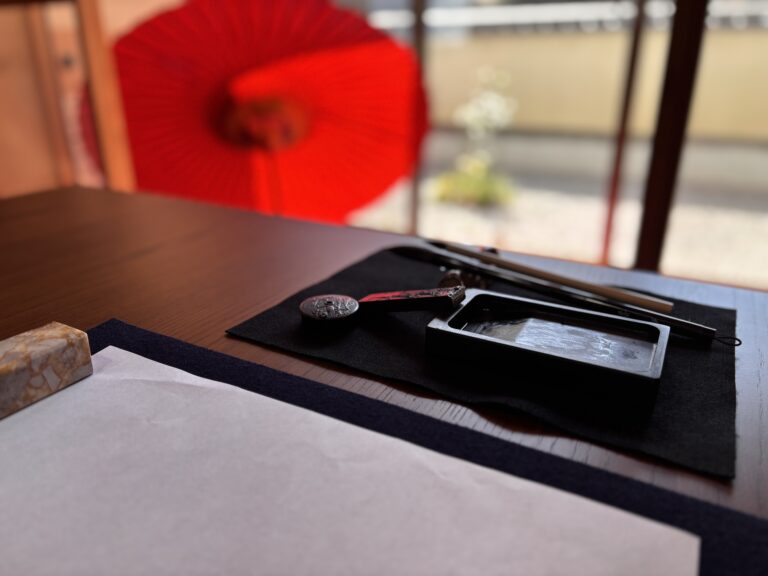
When I welcome guests for a tea ceremony, I prepare everything in advance. I boil water in the kettle, sift the matcha, prepare the tea utensils, and arrange the sweets.
Once the guests arrive, the host begins the matcha-making process, or otemae.
While the host prepares the tea, the guests take their time watching the process and enjoying some Japanese sweets. Then, when the matcha is ready, they enjoy that single bowl of tea slowly and mindfully—but without taking too long.
There is a reason for this.
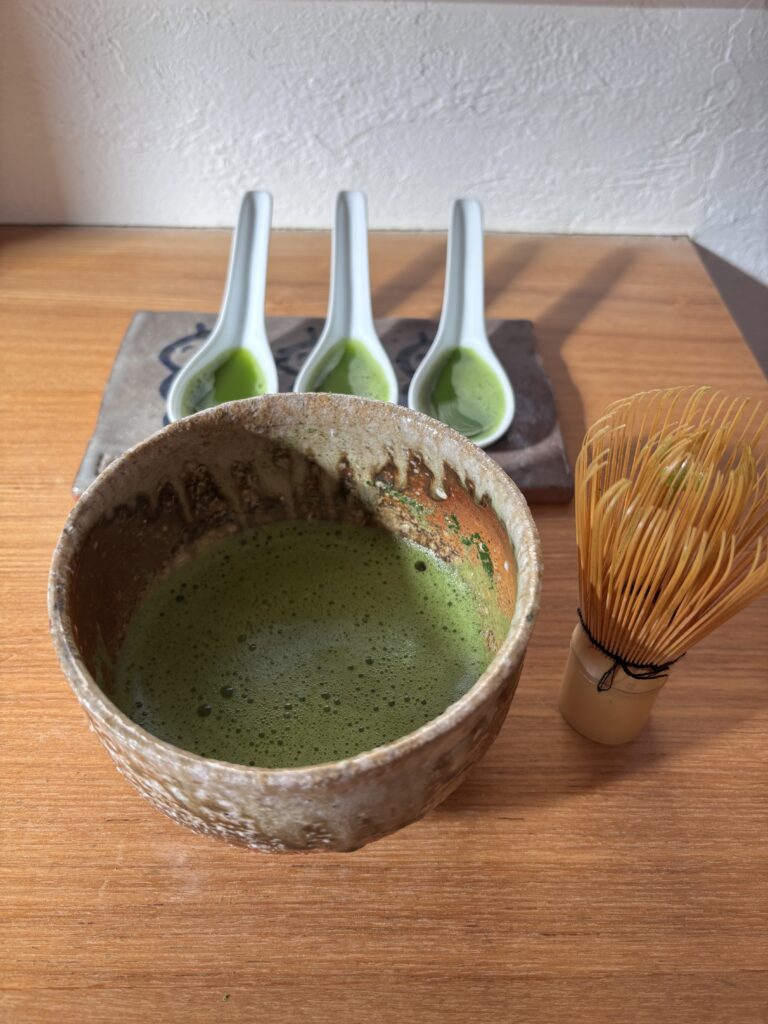
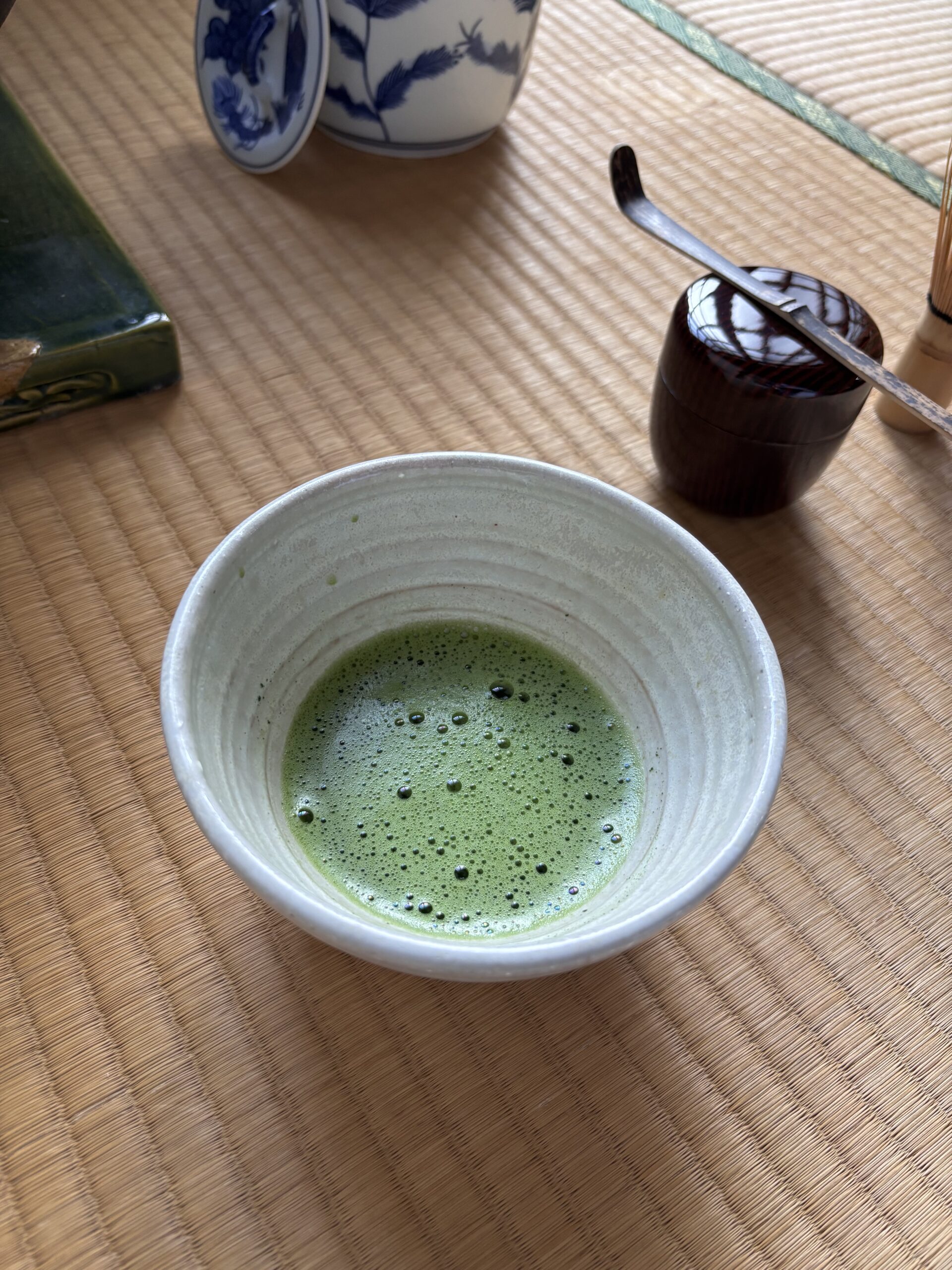
Matcha is a powdered tea, so if you leave it sitting for too long, the powder begins to settle. Freshly whisked, hot matcha is at its best. So, after appreciating its aroma, temperature, texture, and taste, we drink it in just three or four sips.
Even when using a very simple method of preparing matcha, following the traditional tea ceremony procedure takes nearly five minutes before the first bowl is served.
And the second guest has to wait even longer.
The third guest waits longer still.
In a traditional tea ceremony, all the guests may share the same tea bowl. After the first guest finishes, the host rinses the bowl with hot water, wipes it with a cotton cloth, and prepares the next bowl.
This means that the next guest cannot drink until the previous guest has finished.
It is not a style where everyone holds a bowl, chats, and drinks together at the same time.
At Oh! Mama, however, we prepare a separate tea bowl for each guest. The host still prepares each bowl one at a time, so the process takes time. And just as in traditional tea ceremony, each guest receives their tea freshly whisked and enjoys it while it is still hot and at its best. The difference is simply that each guest has their own bowl.
So, do I do all of this at home, too?
Suppose I am at home by myself and suddenly feel like having a bowl of matcha. Or perhaps I want to make some matcha for a family member who does not study tea ceremony.
In that case, I keep it simple.
I sift the matcha, put it directly into a tea bowl rather than using the special tea container used in the tea ceremony, pour hot water from a kettle or thermos, and whisk it.
That’s it.
There is no need to prepare the room, arrange all the utensils, or follow the formal sequence of otemae.
But if I know in advance that someone who studies tea ceremony—or someone who expects a tea ceremony—is coming to my home, I prepare properly and welcome them as a host.
Usually, these are people I have invited myself: someone coming for tea practice, friends who studies tea, or senior tea practitioners.
When both the host and the guests share the same understanding and expectation—that this is going to be a tea ceremony—I follow the traditional process.
I think it is rather like having tea in everyday life.
You might make yourself a cup of black tea with a tea bag when you are alone at home.
But if you invite friends and say, “Let’s have a lovely afternoon tea today,” you might put flowers on the table, bring out your best teapot and cups, and make the occasion special.
Both are ways of enjoying tea.
The difference is the occasion and the intention behind it.
Why spend so much time doing something so simple?
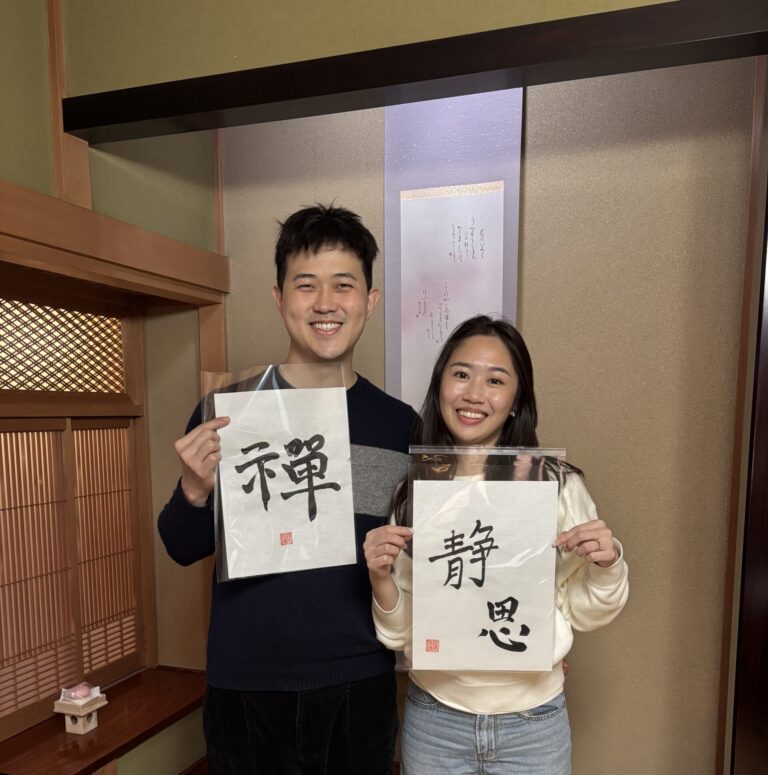
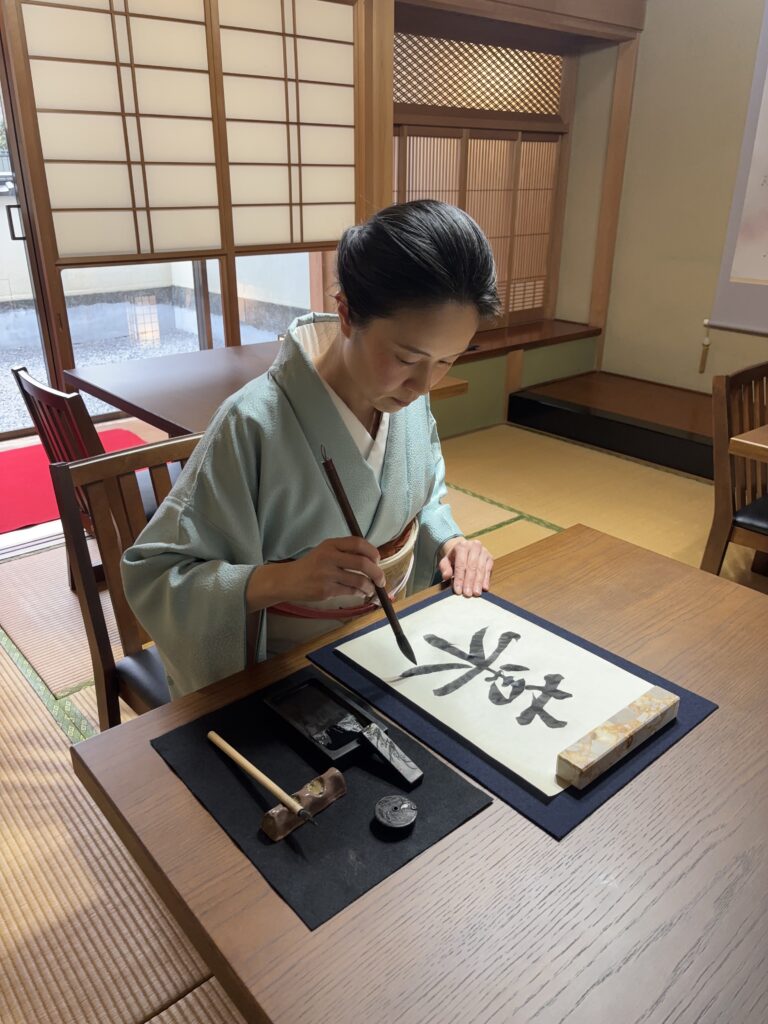
Recently, two university students stopped by Oh! Mama and experienced the tea ceremony.
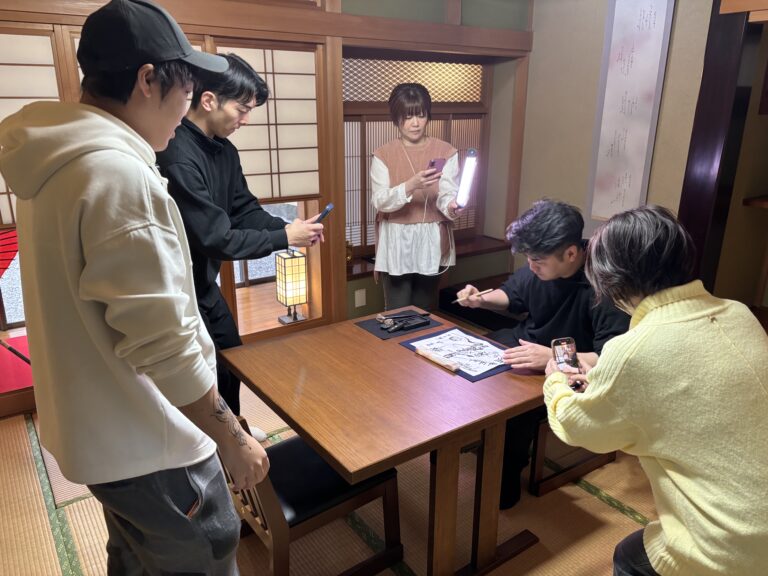
After I explained our calligraphy and tea ceremony experiences, they said something that stayed with me.
They told me that, for young people today, “taipa”—short for time performance, or getting the most value out of your limited time—is very important. And precisely because of that, they felt that having a slow experience like a tea ceremony could be especially valuable.
I thought that was an interesting perspective.
A quiet moment to focus on one tea bowl, away from your screen.
You notice the taste and fragrance of the tea, and listen to the gentle sound of the water in the kettle.
And then, perhaps most beautifully, you notice the moment when the sound of the kettle—matsukaze, “the wind in the pines”—fades away, leaving a moment of silence.
This is, in a sense, a kind of digital detox.
At Oh! Mama, I hope you will experience not only how to make and drink matcha, but also this quiet moment of Japanese culture.
Our private matcha tea ceremony is held in a traditional Japanese house in Ikenoue, Tokyo, near Shibuya.
If you are visiting Tokyo and would like to step away from the busy city for a little while, we would be happy to welcome you.
Slow down.
Look. Listen. Taste.
And enjoy one bowl of matcha, one moment at a time.