Questions about Sado, the Tea Ceremony: If there’s a “Way of Tea,” shouldn’t there also be a “Way of Sake”?
This is a question my husband asked me as I was writing another blog about the tea ceremony.
Tea ceremony is written 茶道 (sado) and it literally means “the way of tea”.
Many people may be surprised to hear that sake appears in the Japanese tea ceremony. However, in the most formal style of gathering, called a chaji, sake actually plays an important role.
What’s a Chaji?
A chaji is the highest and most formal form of tea gathering—a full-course hospitality experience that lasts nearly four hours, created by the host for the guests. Dates are set in advance, invitations and replies are exchanged, and preparations begin long before the actual day.
In a traditional tea gathering, the guests have a specific hierarchy. The main guest is called shokyaku, the “principal guest,” a custom that comes from the days when tea culture flourished among the samurai and aristocratic classes. The shokyaku was often a high-ranking lord; accompanying him were the second guest (jikyaku) and the last guest (suekyaku, often called otsume).
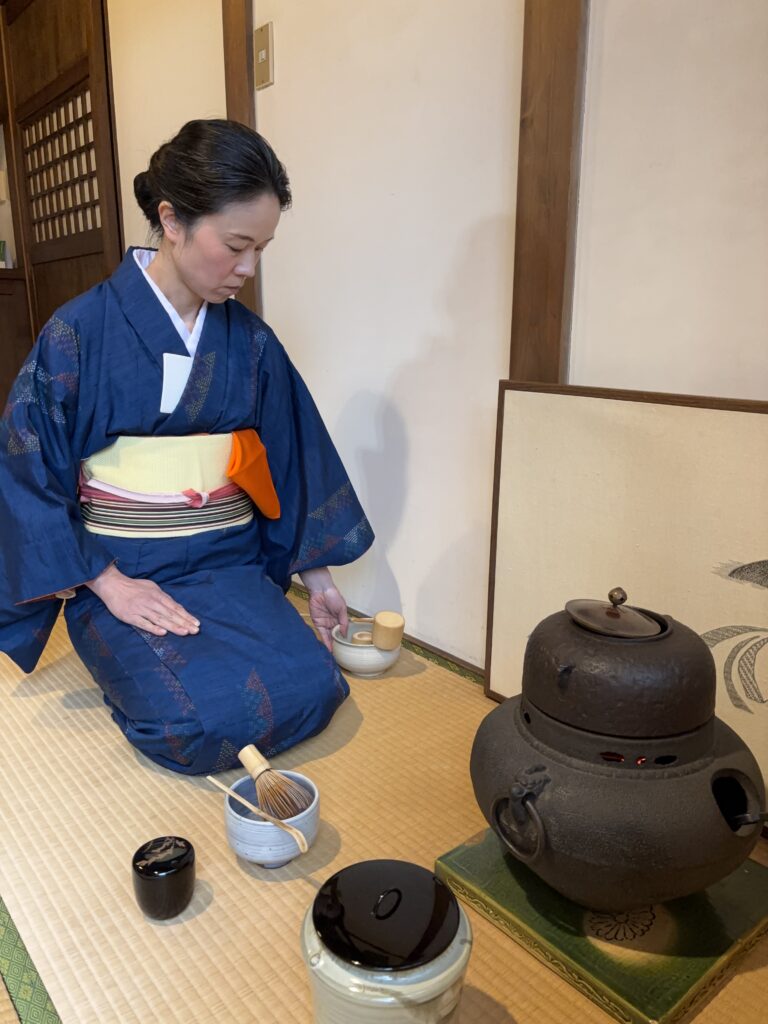
On the day of the chaji, guests gather in a waiting area, sip warm water, walk through a carefully tended garden, purify their hands with water, and finally enter the tea room. They view the hanging scroll, the hearth, and the utensils, exchange greetings with the host, and watch as the host adds charcoal and incense to the hearth—filling the room with a delicate fragrance.
Then, the meal begins.
The Kaiseki Meal—and the Appearance of Sake
Kaiseki originally meant “a warm stone carried in the pocket to ease the hunger of Zen monks.” Today, however, it resembles a refined Japanese full-course meal with sashimi, rice, soup, a main dish and more.
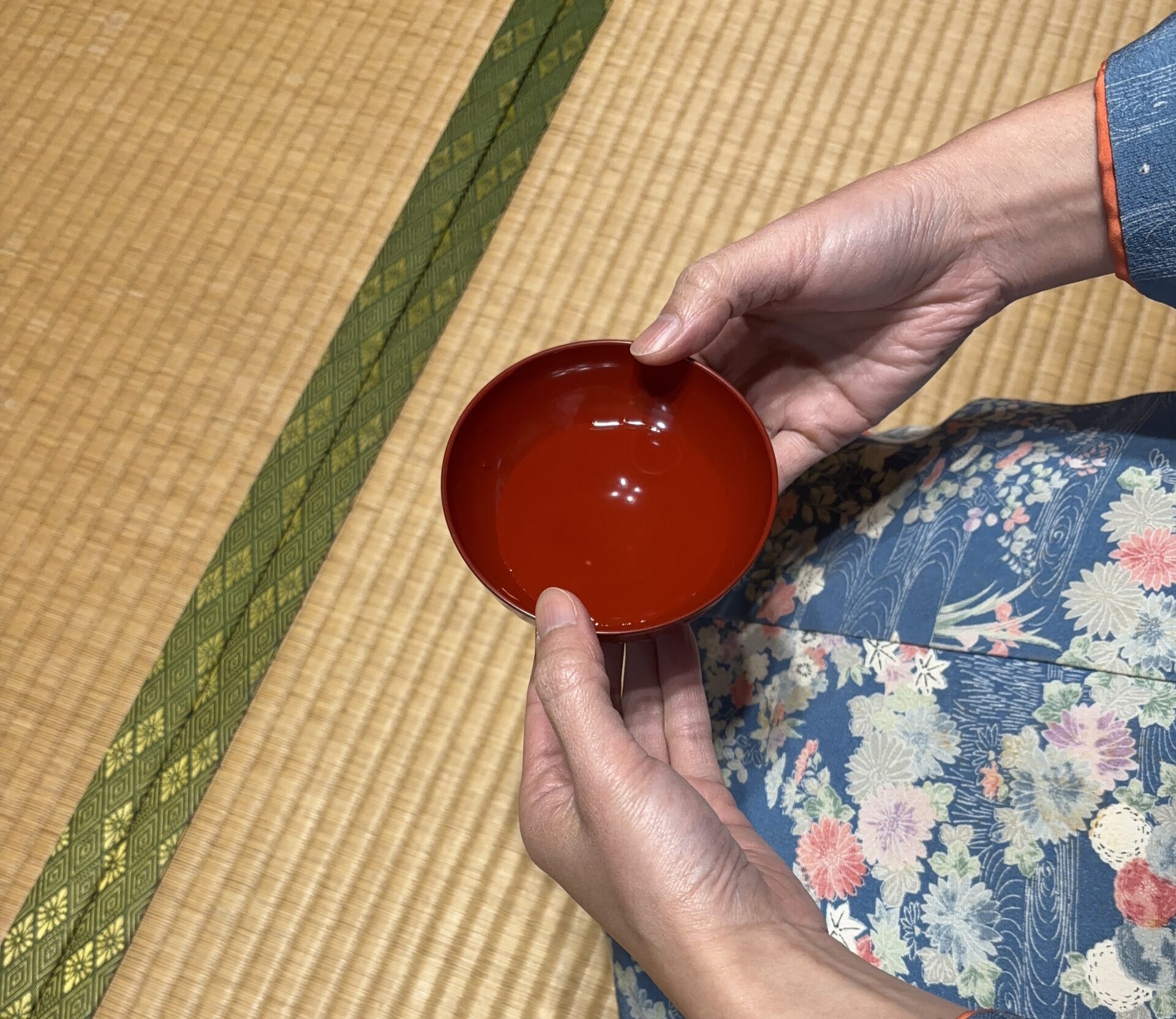
After the first tray of rice, soup, and sashimi is served and lightly enjoyed, the host brings out the sake.
Yes—this is where the “Way of Tea” quietly includes a “Way of Sake.”
The host offers sake to the principal guest first, using a set of small, stacked ceremonial cups. The principal guest bows to the second guest meaning “Please allow me to go first,” then receives the host’s pour. The second guest and the last guest follow in order, with precise etiquette guiding every movement—from how the cup is held and placed to how the food is positioned.
And this is only the beginning.
Chidori : Zigzag Pouring of Sake
After the meal—simmered dishes, rice, miso soup, grilled dishes, and clear soup along with sake—another round of sake appears with some delicacies. First, the host pours sake for the guests, and offers each one a piece of treats.
Then, one of the most interesting parts begins: chidori, a zigzag pattern of pouring.
Principal Guest → Host → Second Guest → Host → Last Guest → Host…
Traditionally, everyone uses the principal guest’s cup, wiping it with paper each time (modern gatherings may use individual cups for hygiene).
Each person knows exactly what to do—when to pour, how to receive, what to serve, and even whom to speak to. Nothing is random; everything is choreography, forming the overall movements of the tea room.
What makes this ritual even more complicated is hassun—a plate of delicacies from the sea and the mountains. For example, while the second guest is pouring sake for the host, the principal guest offers the host a piece of food. As the host finishes drinking, the second guest requests another pour. Not only the host, but the guests also pour sake and serve food. When alcohol is involved, it can seem even more complicated, can’t it?
The sequence is ceremonial, and—according to one of my tea school seniors who loved sake—“the most fun part of the whole chaji !”
And the Tea Gathering Continues…
Even after the sake portion ends, the chaji still has much to offer: hot water, pickles, sweets, a short intermission, followed by strong matcha (koicha) and weak matcha (usucha) with some more sweets. Only then do the final greetings bring the gathering to a close.
A chaji can last nearly four hours, but it unfolds with a graceful rhythm formed by both host and guests who understand their roles.
A Career in Sado, the Tea Ceremony
My tea teacher once said:
“In sado, it’s not how many years you study, but how many chaji you have hosted yourself.”
Hosting a chaji is considered the true measure of one’s maturity in tea practice.
About the Cost…
People often wonder about the expense of such a gathering. About 20 years ago, when I joined my teacher and a senior as guests at a chaji, I paid an amount similar to a typical wedding gift in Japan. Today, with rising prices, the cost may be 1.5 times higher.
(Back then, I suspect my teacher and the senior quietly covered a good portion of the total for me…)
In Closing
Tea ceremony involves far more than drinking tea. It encompasses hospitality, cuisine, etiquette, incense, seasonal aesthetics—and yes, even a refined tradition of how to offer, pour, and enjoy sake.
So if you’ve ever wondered, “If there’s a Way of Tea, shouldn’t there be a Way of Sake?”—
now you know: it already exists, quietly embedded within the heart of tea ceremony.
Please note that, unfortunately, we are not offering chaji and sake at this time. Maybe someday in the future…