Questions about Sado, the Tea Ceremony: Do You Have to Wear Kimono?
Short answer: No, you don’t have to wear a kimono to enjoy the tea ceremony.
In my high school sado club, we practiced in our school uniforms.
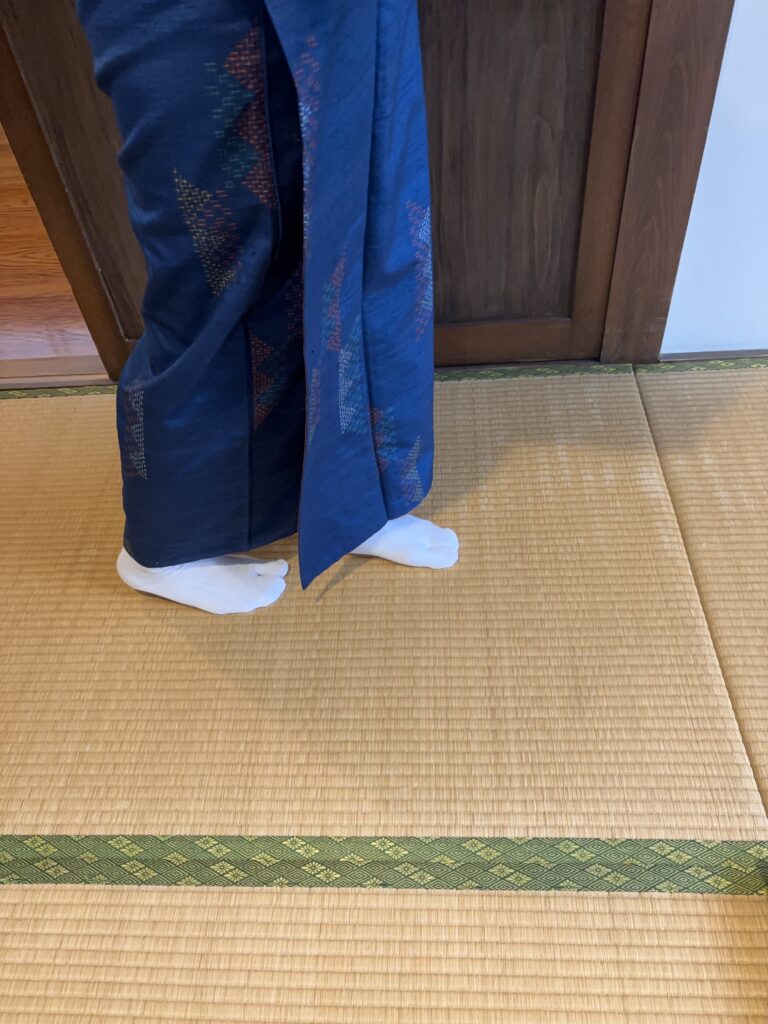
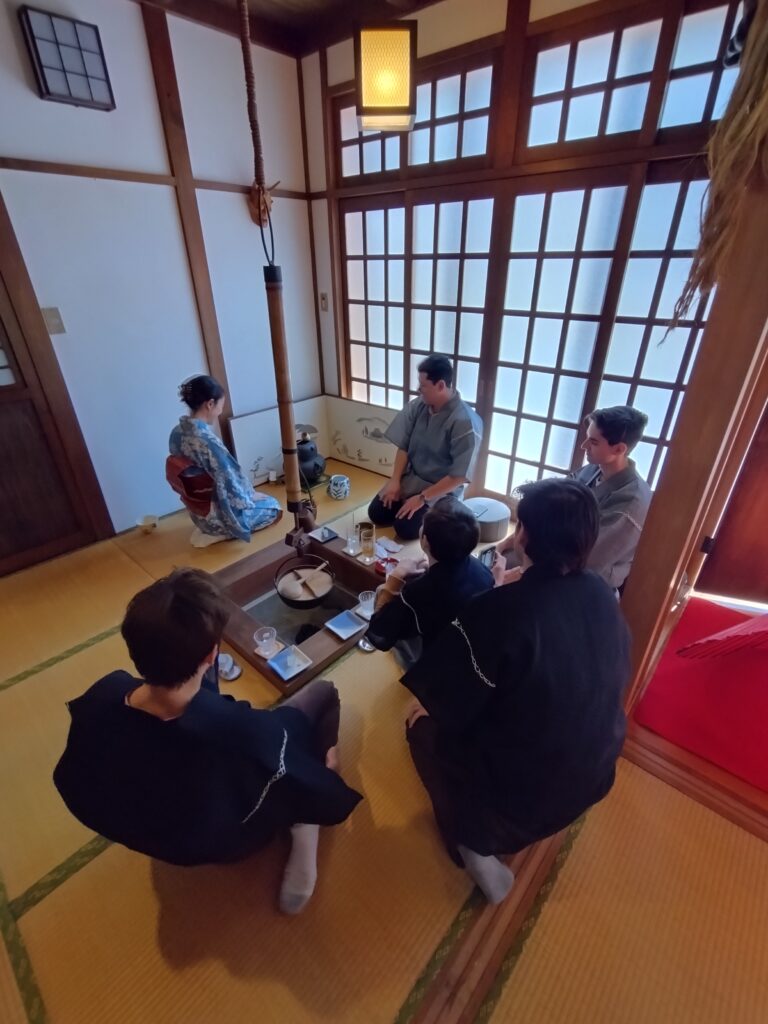
That said, the style of tea ceremony we know today took the present form during the samurai era, when everyone wore kimono as everyday clothing. Naturally, the tools and gestures of the tea ceremony were designed with kimono in mind—because that’s simply what people were wearing.
So how does that play out?
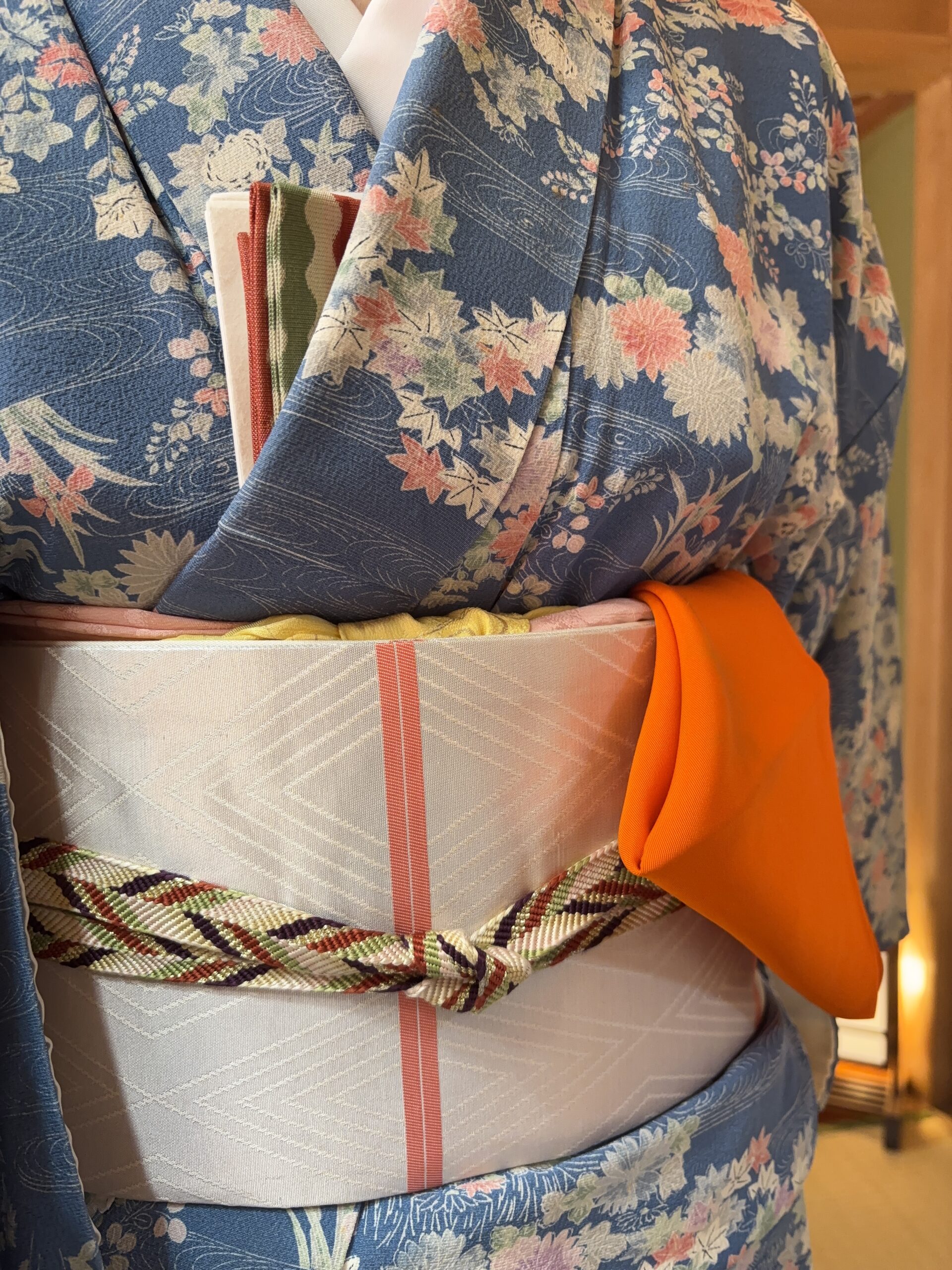
Both the host and sometimes the guests use a fukusa, a square silk cloth. The host tucks it into the obi (kimono belt) and uses it constantly: purifying the tea container and tea scoop, or even using it like a pot holder when opening the hot kettle lid. It’s not a decorative accessory—it’s a practical tool.
Guests also carry a fukusa, but instead of tucking it into an obi, they fold it and slip it into the futokoro—the overlapping part of the kimono at the chest that’s held securely by the obi. It doesn’t fall out, and it’s easy to take out when needed.
They also keep kaishi—thin paper sheets whose name literally means “pocket paper”—in the same spot. Guests use kaishi as a plate when receiving sweets, and after drinking the tea, they wipe the rim of the bowl with their fingers and then clean their fingers with the kaishi. Used kaishi are tucked into the right tamoto—the sleeve pocket. With one smooth movement, you can drop it right in. It’s like having two roomy pockets.
Doing all this in Western clothing becomes… a little trickier.
For example, my school uniform was a blouse tucked into a skirt with a vest, and in winter a sweater or blazer on top. You could wear a belt to imitate an obi and make handling the fukusa easier, but our teacher never required that. So we would just tuck the fukusa into the waistband of our skirts when preparing tea. Since Western clothes have neither futokoro nor tamoto, we thought, “Well, pockets then!”—but school uniform pockets were far too small for fukusa or kaishi. We ended up tucking things around the waistband or carrying them in a small pouch called a fukusa-basami. It worked, technically, but it never had the effortless elegance of kimono, where everything has its natural place and nothing extra needs to be held in the hands.
Conclusion:
You absolutely can practice tea ceremony without wearing a kimono.
But kimono? It’s definitely cooler and effortlessly elegant.