Questions About Shodo, Japanese Calligraphy: The History of Shodo Performance
Recently, I was watching videos of high school students performing shodo—writing bold characters on extraordinarily large sheets of paper while music plays. This lively style, now known as shodo performance, is still a young cultural practice in Japan.
Before diving into shodo performance, let’s look at a tradition that has existed long before it.
Shodo Has Always Had “Performance”: The Tradition of Sekijo-Kigo
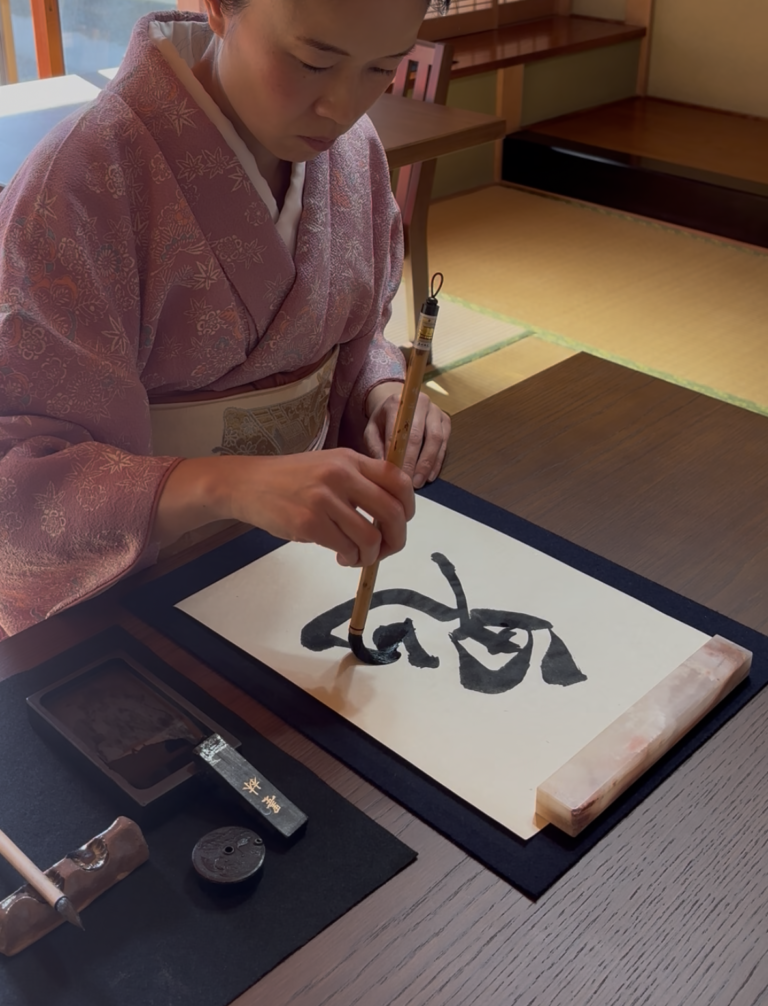
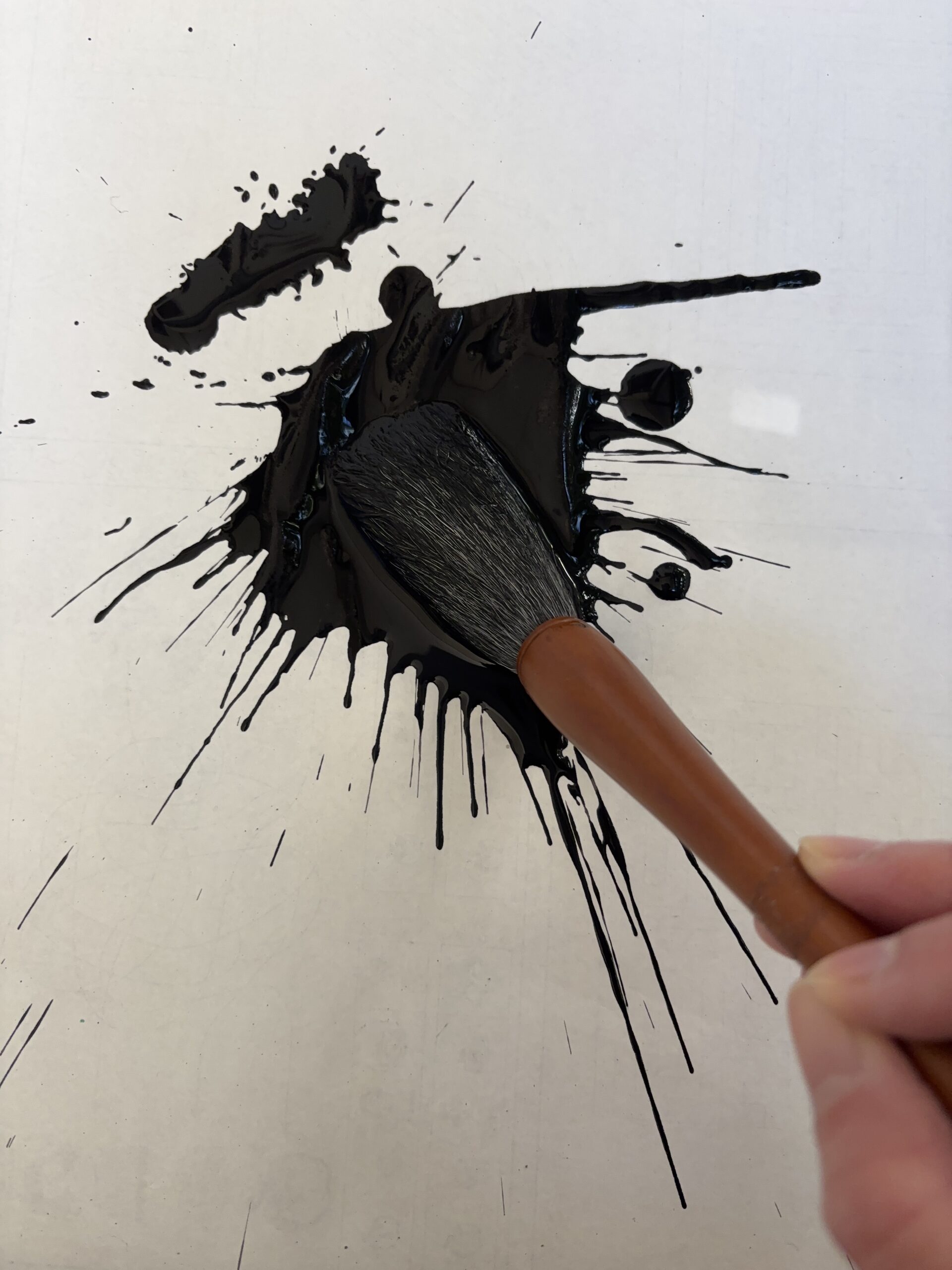
In the world of shodo, or calligraphy, the practice of sekijo-kigo (席上揮毫) has performed for a long time. It refers to a calligraphy demonstration shown in front of an audience.
Because calligraphy is a “one-shot” art in which rewriting is discouraged, the atmosphere becomes intensely focused. In that tension, calligraphers write with deep concentration as people quietly observe each brushstroke.
You can see this traditional form at exhibitions and events. For example, award-winning calligraphers at the Mainichi Shodo Exhibition have held sekijo-kigo sessions, showcasing the rhythm and energy of calligraphy.
Compared with this long tradition, modern shodo performance is surprisingly new—and much more theatrical in style.
How Modern Shodo Performance Began
Around 2001, the calligraphy club at Mishima High School in Ehime Prefecture began creating large, dramatic calligraphy works accompanied by music during their school festival and local events. Their goal was to help energize their town, which prides itself on its paper industry. Their performances soon captured public attention.
By 2007, they were performing in shopping malls. Local officials and organizers of the regional “Paper Festival” invited them to appear, and in the summer of 2008, the first Shodo Performance Koshien was launched. “Koshien” is a name often used for nationwide competition for high school students in Japan.
Since then, the movement has grown rapidly:
2008: First Shodo Performance Koshien
2009: A segment on the Nippon TV morning show started to hold competition for the high school calligraphy performers
2010: Release of the film 書道ガールズ‼わたしたちの甲子園 (Shodo Girls!! Our Koshien), based on the real story
This year, 2025, the competition celebrated its 18th year, with applications from 104 schools. And according to the official website, in 2026, a new event—the All-Japan University Shodo Performance Championship—is scheduled to begin. It’s exciting to see how this young art form continues to grow.
Why High School Performances Feel So Passionate
To fully appreciate these performances, it helps to understand Japanese high school club culture.
Most schools have active clubs—sports and cultural arts. Each club has its own room on campus, a modest budget, and practices almost every day after classes. Many clubs aim for regional or national competitions.
Teachers are reassigned every few years, and often become club advisors regardless of their specialty. But sometimes, a teacher with strong personal experience in a particular field—whether soccer, music, or calligraphy—joins a school. Their passion can transform a club, elevating it to national prominence.
Calligraphy clubs are no exception. Their steady practice, creativity, and teamwork shine especially brightly in shodo performance.
Knowing this background makes the Shodo Performance Koshien even more enjoyable to watch. You can feel the students’ dedication in every stroke.
For Manga Lovers
If you enjoy manga, I recommend “Tomehane!”, a story about high school students who discover the joy of calligraphy. It’s a fun way to learn more about shodo and the real lives of Japanese high schoolers.