Questions About Shodo, Japanese Calligraphy: Why Is the Vertical Stroke So Difficult?
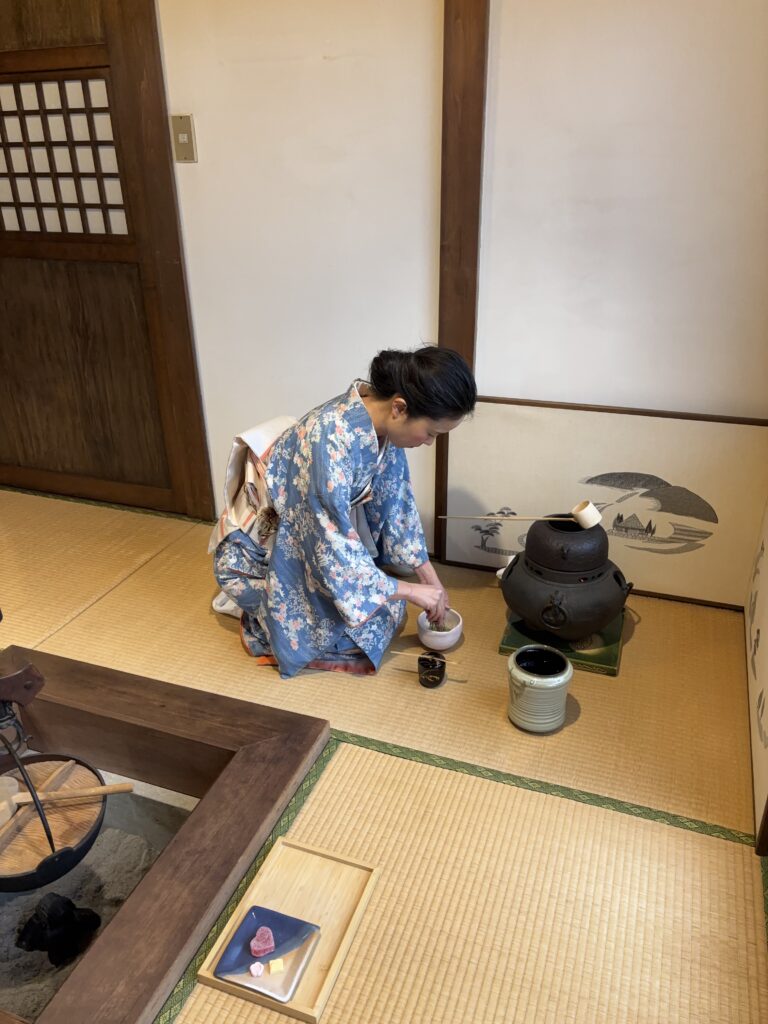
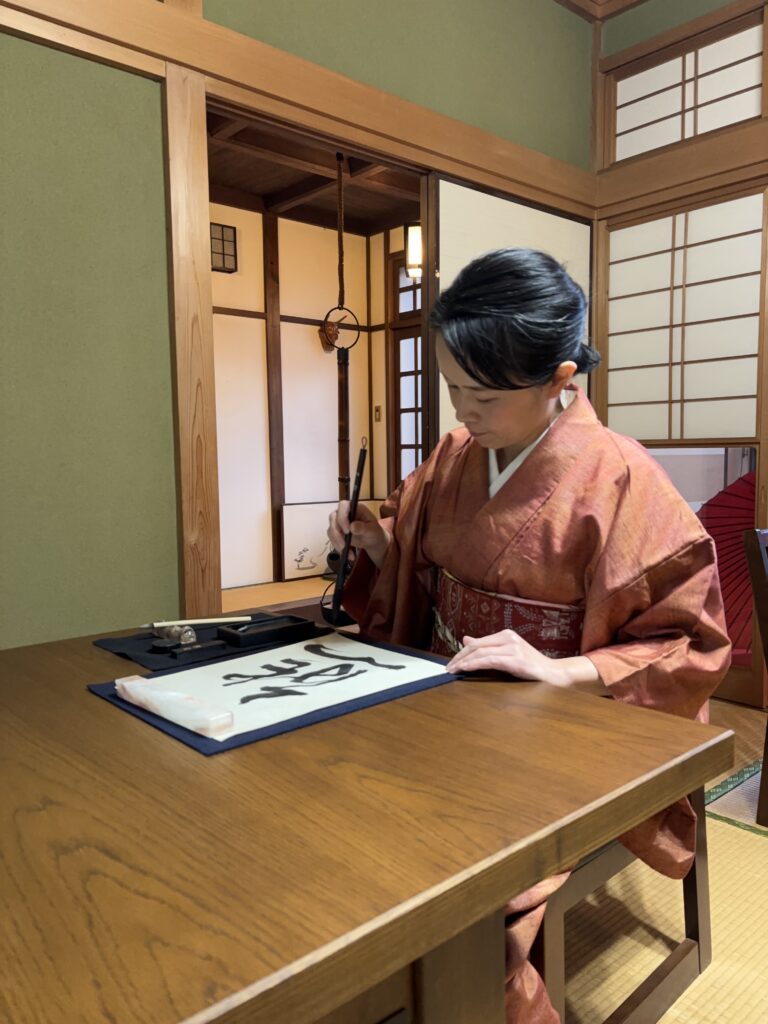
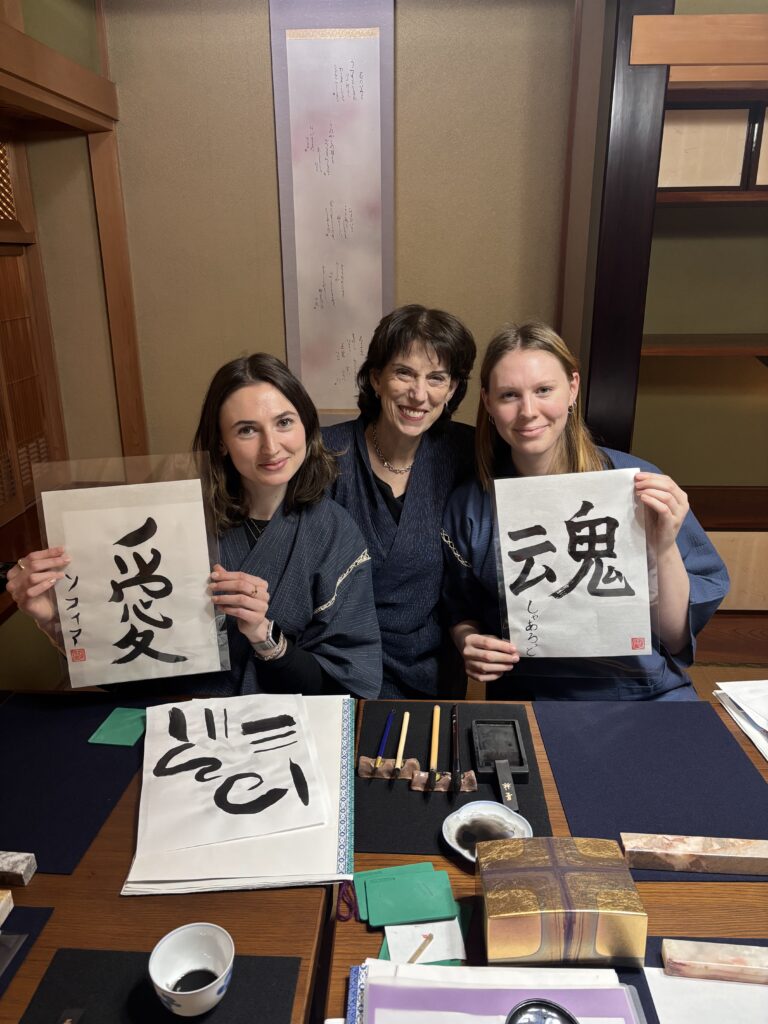
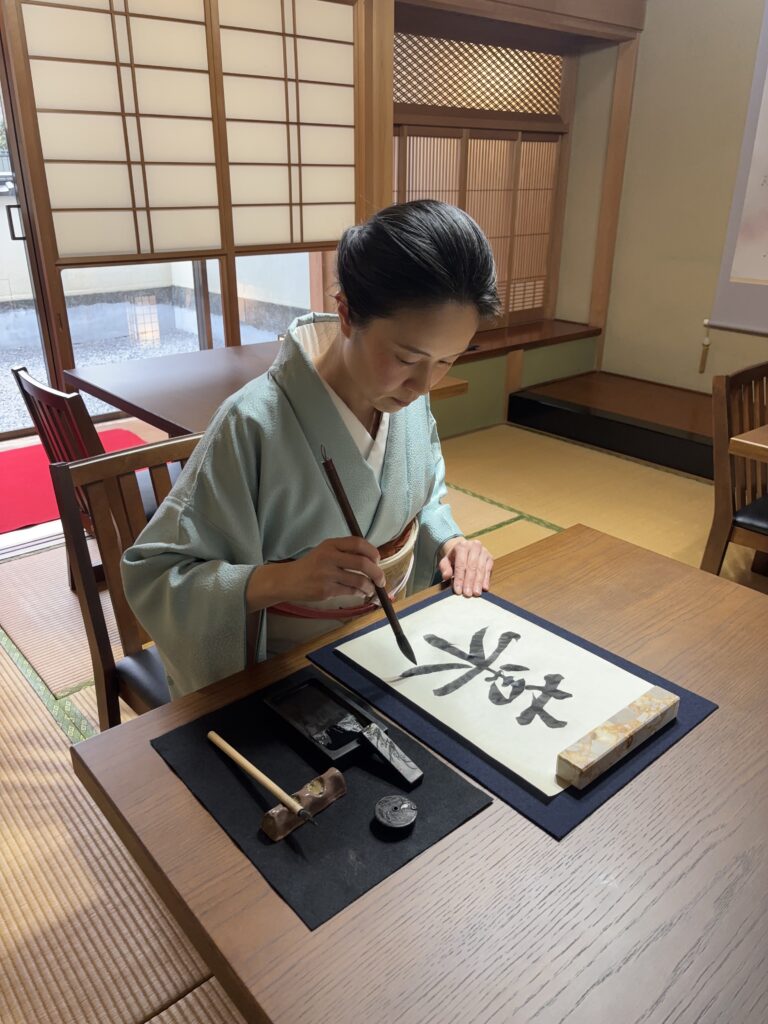
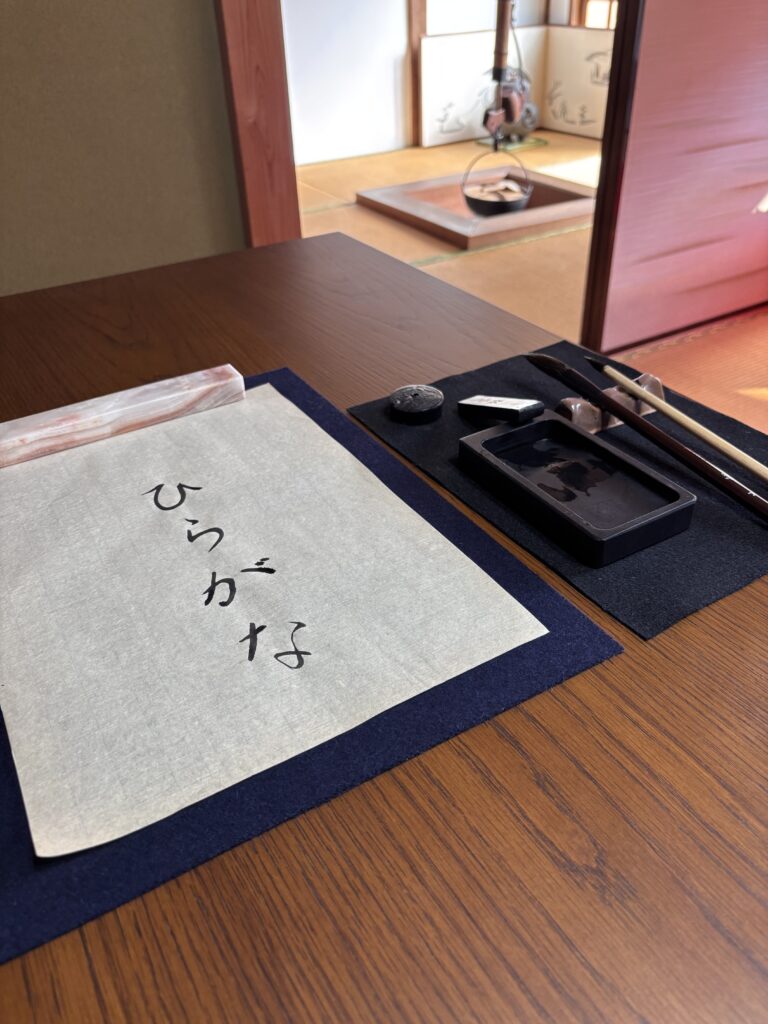
At our small salon in Ikenoue, just four minutes by local train from Shibuya, guests can experience Japanese calligraphy and tea ceremony in a quiet, traditional Japanese house.
This blog is part of our ongoing “Questions About Shodo” series—a place where we explore the simple questions that arise when you actually try holding a brush yourself.
Today’s question is one I still struggle with:
Why is the vertical stroke so difficult?
Starting with the Horizontal Line
When you begin learning calligraphy, your teacher usually starts with 「ー (ichi)」—the number one. By practicing a single horizontal line, you can soon write one (一), two (二), and three (三). In fact, these are kanji made only from horizontal strokes.
After that, the teacher moves on to the vertical stroke. You might think, “I can already write horizontal lines, so this should be easy.”
But somehow… it isn’t. It suddenly feels much harder. Why?
I Still Can’t Write a “Cool” Vertical Line
I am not a calligrapher. I am just a guide who speaks English—and even now, I cannot confidently say I can write a beautiful vertical stroke.
It is just one line. So why is it so hard? I’ve been thinking about this, and I have a few ideas.
Reason 1: Body Movement
For many people, horizontal strokes feel easier.
If you are right-handed, you pull your arm from left to right. By moving mainly from the shoulder, the line naturally rises slightly upward to the right.
In calligraphy, a gentle upward slant usually looks more elegant, so this natural movement works in your favor.
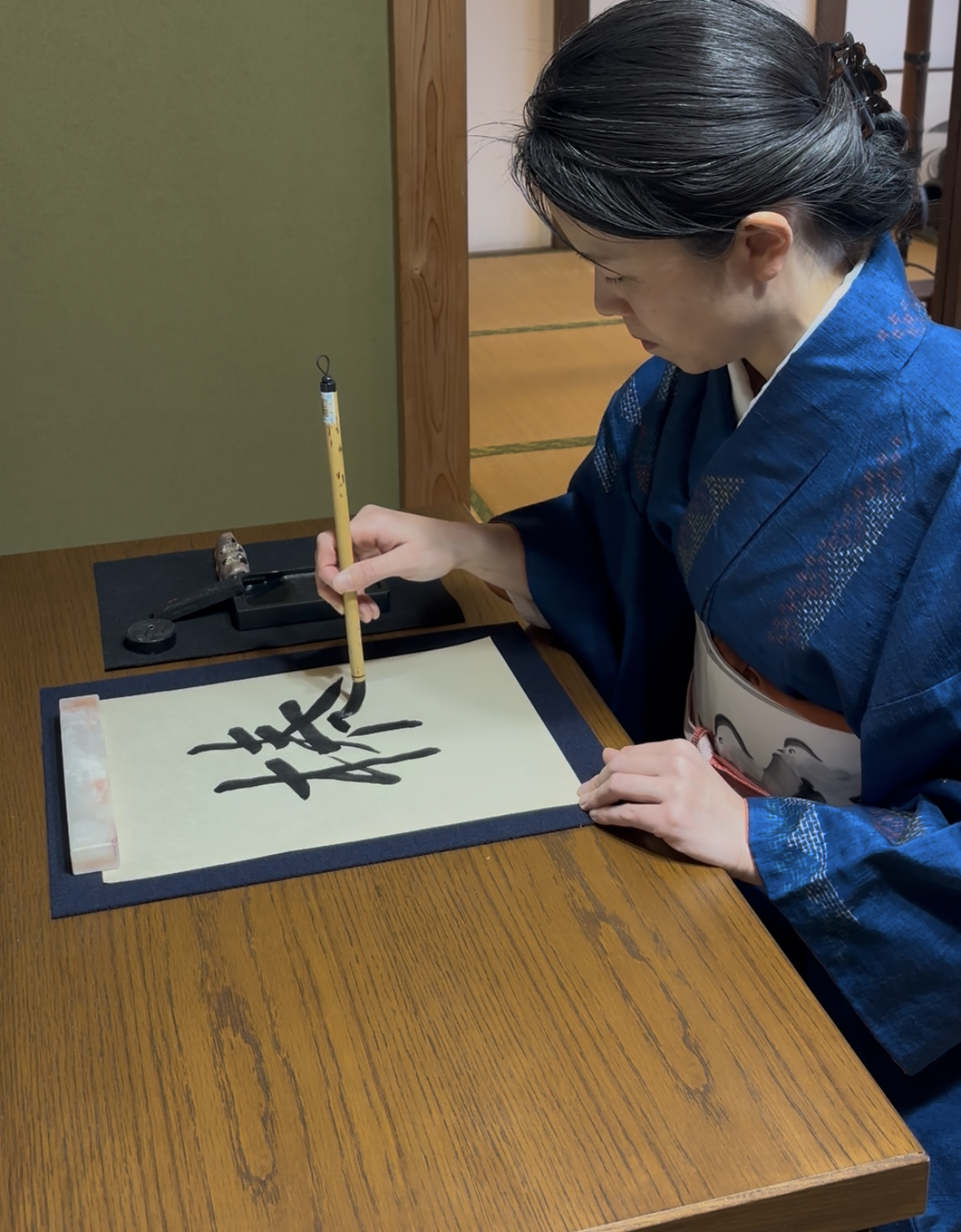
Vertical strokes are different. A beautiful vertical line should go straight down from top to bottom.
If you rely only on your elbow, the line drifts slightly to the lower left. If you rely only on your shoulder, it drifts to the lower right. To draw a straight vertical line, you must combine shoulder movement and elbow movement very precisely.
Even then, the line often bends softly instead of staying firm and straight.
This is where posture and full-body balance come in.
In short, the vertical stroke is difficult because it requires complex coordination of the body, just to draw one straight line.
Reason 2: The 45-Degree Angle
In kaisho—the standard, readable style used in books and newspapers (similar to block letters in English)—strokes look best when drawn with the brush held at about 45 degrees.
My teacher explained it like this:
・Place the brush on the paper at a 45-degree angle.
・Move straight down while keeping that angle.
・Lift the brush off the paper at the same angle.
If done well, the stroke becomes long and sharp—almost like a slim parallelogram. I once described it as looking like a replacement blade for a box cutter.
The problem?
The beginning angle is fine.
But the ending angle is not. Instead of sharp and crisp, the end becomes round and heavy. It lacks that clear finish.
Why can’t I keep that final 45 degrees?
Honestly… I don’t know yet. Maybe the answer is simply practice. Or maybe it’s something the body understands long before the mind does.
For now, this question remains unanswered.
But perhaps that is exactly what makes calligraphy interesting. Even a single line can take a lifetime to understand.
If you’d like to explore the world of Japanese, we would be happy to welcome you to our quiet Japanese house in Ikenoue.
The vertical stroke is still difficult.
And maybe… that’s okay.
To be continued.